Although Reign follows the story of Mary, Queen of Scots, and she has long since left France, the plot continues to follow the characters that she left behind. We see a traumatised King Charles IX struggle with the weight and responsibilities of the crown, his mother trying to help him, and his brother trying to overthrow him.
Very little of what we see of the French court in Reign is drawn from history. At the time, France was dealing with a bloody and violent civil war in what would become the “First War of Religion”. There would be four wars of religion in Charles’ brief reign, and a further five when his brother, Henri, succeeded him. That’s a total of nine wars within a twenty-year period. You would think that that kind of activity would give Reign plenty to spin into a storyline, but hey ho, they focused their creative efforts elsewhere.
King Charles IX
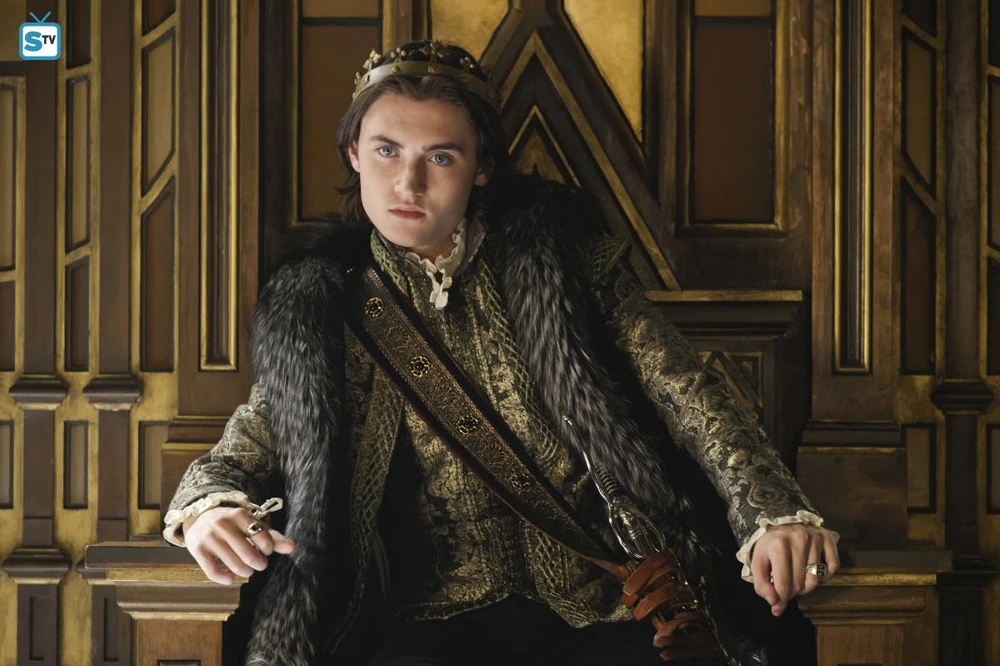
Reign presents us with a young Charles IX struggling with the trauma of the last season, where he witnessed his friend burn to death. He is so traumatised he can’t handle life, let alone the daily pressure of ruling a country. His mother, Catherine de Medici, does her best to hide his condition from the rest of the world. His condition deteriorates to the point where it cannot be ignored. He leaves the palace to go “hunting” and returns covered in blood. He speaks to corpses, and rumours run rampant that he’s actually a cannibal. He eventually recovers enough to perform his duties, with the help of a conversion to Protestantism and the companionship of a peasant girl whom he intends to marry.

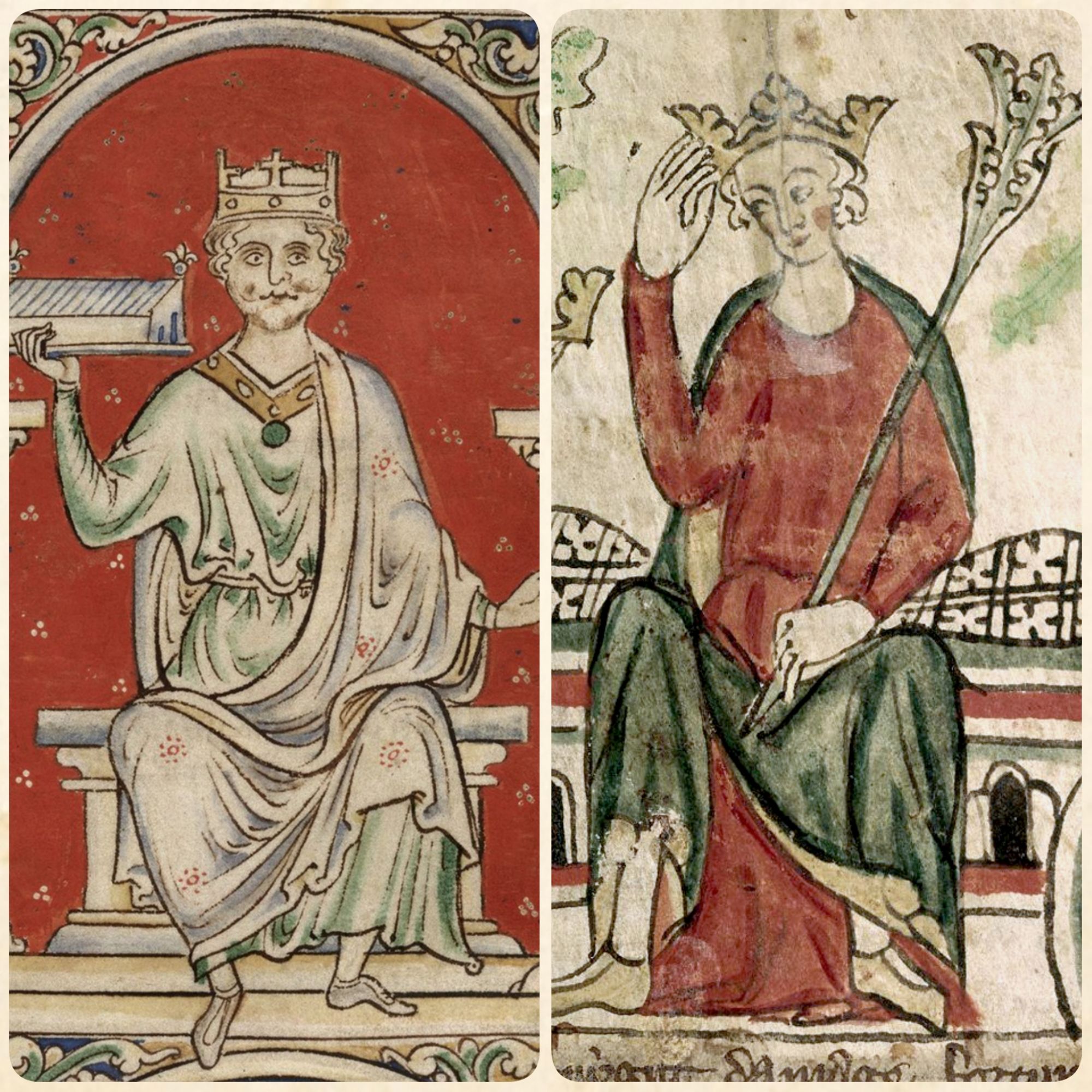
The historical Charles was much younger during these years. He succeeded his brother at ten years old and was around fourteen when Mary was in Scotland, marrying Lord Darnley. Because of his age, his mother had initially ruled as his regent. At fourteen, Charles came of age and was able to rule in his own right. However, he was still extremely young for his responsibilities, and his mother continued to dominate the court and policy.
While Mary was occupied with her return to Scotland and issues of the Privy Council, her Uncle, the Duke of Guise, was travelling and stopped at the town of Vassy, in which his mother lived. She told him that Protestants were gathering in the town. The Duke investigated and discovered a meeting which led to ‘the Massacre of Vassy’. Fifty people were killed, including women and children, and the violence sparked the wars that would last throughout his reign.
Charles died in 1574 at the age of twenty-three, and in the last couple of years of his life, he became mentally unstable, but nothing quite like what we see at the level in Reign. That said, what we see in Reign is not inaccurate, it’s just the wrong King Charles.
Two hundred years earlier, in 1380, another Charles Valois became king at eleven years old. He was mentally unstable, which first manifested during a military campaign at the age of twenty-four. In an attempt to cheer him up, his wife held a ball in which Charles and his close friends would dress up as wild men of the forest. Unfortunately, at one point in the evening, one of the guests got too close to the costumes with a lit torch. The costumes were made of linen, resin, and flax. They were extremely flammable, and immediately, fire swept through the ballroom. It became known as the Bal des Ardants, or the Ball of the Burning Men. Four of Charles’ closest friends burned to death in front of him, which permanently damaged Charles’ sanity. He suffered greatly with delusions, but his mental state was soothed by a woman who wasn’t quite a peasant but was from the lower rank of the gentry.
The similarities are so obvious, I wonder if the writers decided to use this earlier Charles as the inspiration for their French-related plot lines. Either that or they confused the two Charles Valois.
King Henri III
Back in fiction, while Catherine de Medici tries and fails to cover up Charles’ issues, her younger son, Henri, returns to the French court with an eye on the throne. Backed by his sister, Queen Elisabeth of Spain, Henri wastes no time disrupting what little control his brother holds over France. He does everything he can to provoke England into a war, showing that he’s a strong leader in the face of Charles’ instability. He even goes so far as to seduce Charles’ mistress, and the two of them run away from court to await the Spanish Armada, which is promised to put them on the throne. Unfortunately, it is around this time that said mistress discovers she has a fatal nut allergy. Distraught at losing her, Charles and Henri reconcile in order to take down Spain in revenge for pitting them against each other.

Henri de Valois was twelve/thirteen years old during the events of Reign. When Charles had ascended the throne, Henri had briefly been the centre of a plot to overthrow his brother. At eight years old, Henri was hardly the orchestrator of the plot, and it was discovered before anything could occur anyway.
Unsurprisingly, his adult years don’t look anything like they do in Reign. Henri was far more of a hardline Catholic than his brother, who leaned towards tolerance, but he wasn’t chomping at the bit to overthrow Charles. Instead, from the age of sixteen, he took command of the French military and led Charles’ forces during the initial Wars of Religion. For five years, he acted as France’s Lieutenant General before he was elected King of Poland in 1573 with his brother’s support.
In February 1574, Henri arrived in Poland to be crowned king. It was a short-lived position. Within four months, Charles had died, and Henri returned to France to assume the throne. He was crowned King of France in February 1575, and it was around this time that Poland decided to elect a new king who wouldn’t abandon them so easily.
Like his elder brothers, Francis and Charles, Henri was not King of France for long. He died young, at the age of thirty-seven, but unlike his brothers he did not expire from bad health. Instead, having established himself as one of the least popular kings in French history, he was assassinated. His death was greeted with widespread celebrations and hailed as an Act of God. He had been seen as a decadent king, romantically attached to a score of men and women, had openly murdered members of his court who had a claim to the French throne, escalated the Wars of Religion, and held lavish and expensive parties while his people starved to death.
In Reign, we see Catherine de Medici going to great lengths to secure the Valois line. Considering she had ten children, seven of whom survived to adulthood, and four of whom were male, the line would have looked pretty secure. But all four of her sons died young, three of whom after assuming the throne of France. Her youngest son, another Francis, died at the age of twenty-nine, five years before Henri. This meant that upon Henri’s death, the crown passed to his cousin, Henri of the House of Bourbon and the Valois line died out, as Catherine is shown to have feared. In her lifetime, Mary, Queen of Scots witnessed four different Valois kings with the line surviving for only two years longer than she did.
For more BTS, bibliographies, and fun picking apart history, come join me on Patreon. We’re going to be talking a lot about Reign for a while.