At time of writing, it is a bad time to be a British royal. For a family that depends on positive headlines and values quiet action, the current media onslaught centered around the king’s brother is uniquely devastating. There is no need to go through the very many accusations being levelled against Andrew Mountbatten-Windsor, not least because the extent of those allegations have yet to be revealed, but a common question being asked by media outlets everywhere is ‘what next for the royal family?’
On the 19th February 2026, Andrew Mountbatten-Windsor was arrested. It isn’t the first time the royal family has landed on the wrong side of the law. In 2002, Princess Anne was charged and fined for having a dog dangerously out of control. Later, in 2009, Prince Philip was involved in a car crash but was not prosecuted when he voluntarily surrendered his driving license in the immediate aftermath. Andrew’s arrest is related to far more serious offences and raises all kinds of legal questions. It has been a long, long time since a royal has been accused of a crime of such magnitude. The last time a monarch’s sibling was arrested was almost five hundred years ago when Mary I had her sister, the future Elizabeth I, imprisoned in the Tower of London for conspiracy.
Ultimately, this is the crux of the problem. The last time a member of the royal family was arrested for any kind of serious crime was back in the day where the monarch could throw them in the Tower and deal with them at their pleasure. In said day, conversations about Charles’ duty of care to his brother, where Andrew could live, and the implications of succession would have been moot. At best, Andrew could have hoped to rot in the Tower. At worst, he would have been executed but extended the grace of a private beheading.
It’s unlikely, whatever his personal feelings might be, that King Charles is about to throw his brother into the least hospitable prison at his disposal and let him rot. Hence the question; ‘What next for the royal family?’
How does one mete out “the king’s justice” against someone who is, however removed, in line to be king? How can the law hold Andrew accountable when he is part of the one family in the UK that exists above the law? Which leads us to the second question. While media outlets are asking what next for the royal family? People are asking how did we end up in this position? How do we even find ourselves having to invent a legal framework under which someone can be held responsible for their alleged crimes. In short, why is the Royal family royal? Why this family?
The royal family’s authority is drawn from two fronts, both of which have the disadvantage of sounding absolutely ludicrous to the modern ear, so I apologise if it sounds like I’m making fun of the concepts just by describing them. The first is “Hereditary Principle”, the idea that power and status are transferred within a specific family. In this instance, King Charles is king because almost a thousand years ago a French Duke invaded England, defeated his rivals for the recently vacated throne of England, and passed said throne down through his descendents. The second is the “Divine Right of Kings”, which states that the king is king because God (specifically the Abrahamic God of Christianity) has chosen him to be so.
I told you it sounds like I’m making fun of them.
The Hereditary Principle
The hereditary principle already hands by such a precarious thread... The idea that one family alone has the automatic birthright to the crown is already so hard to justify.
Queen Elizabeth, the Queen Mother. The Crown S4 E7
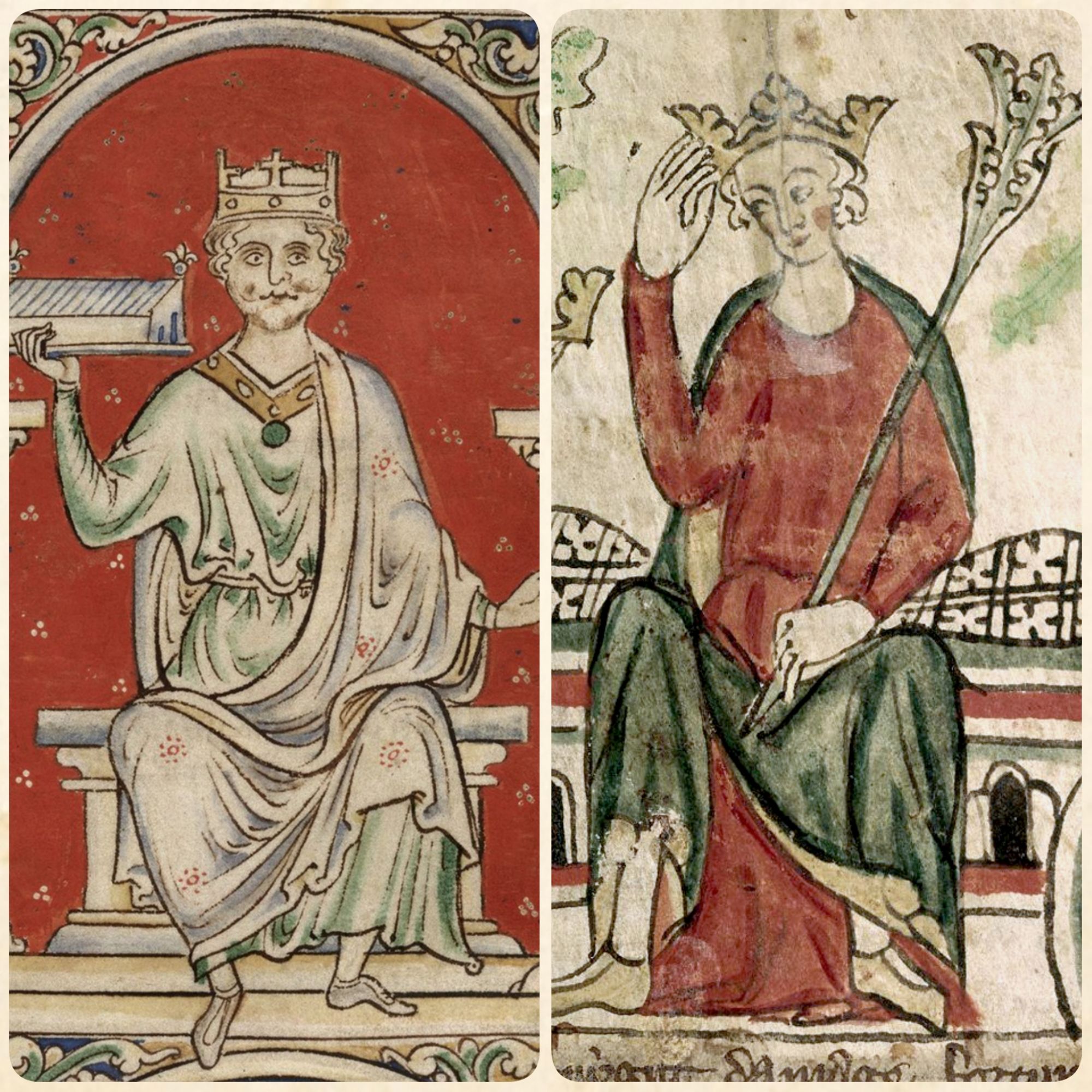
The British monarchy is one of the ten oldest in the world. The royal family can trace their family tree back to eleventh century, almost a thousand years ago, when William the Conqueror became King of England.
The England of the time was unrecognisable as the England of the modern day, and the idea of a United Kingdom was not on the cards for centuries to come. Yet it is from William the Conqueror, who would not have considered himself the King of England as such terms weren’t in use at the time, that Charles Windsor is Charles III by the Grace of God, King of the United Kingdom of Great Britain and Northern Ireland and of His other Realms and Territories.
According to the traditions of the time, William became King of England through Right of Conquest. He fought off his opponents, therefore the land was his. If someone had overthrown him, the land would have been theirs. Nobody did, so the crown passed to William’s son. William would not be the only English king to take the throne through Right of Conquest. From 1455-1487, during the Wars of the Roses, the crown would change hands six times between four people before Henry VII ended the fighting by taking the crown for himself at The Battle of Bosworth.
In the modern day, Right of Conquest is no longer considered to be a reasonable claim to authority. It links closely to the idea that “Might makes right” or that the strongest military power has the right to govern anyone who can’t stand up to them. A principle which was condemned by King George VI during the outbreak of the Second World War.
We have been forced into a conflict and we are called, with our allies, to meet a challenge of a principle which if it were to prevail would be fateful to any civilised order in the world. It is the principle which permits a state, in the selfish pursuit of power, to disregard its treaties and its solemn pledges; which sanctions the use of force, or threat of force, against the sovereignty and independence of other states. Such a principle, stripped of all disguise, is surely the mere primitive doctrine that "might is right"; and if this principle were established throughout the world, the freedom of our own country and of the whole of the British Commonwealth of Nations would be in danger. But far more than this -- the peoples of the world would be kept in the bondage of fear, and all hopes of settled peace and of the security of justice and liberty among nations would be ended.
George VI First Radio Address to the Nation 3rd September 1939
It is perhaps because the Right of Conquest doesn’t hold up to modern sensibilities or, in fact, modern law, that on the official Royal Family website, William’s claim is established threefold. Yes, he won by Right of Conquest however the former king, Edward the Confessor, had chosen him as heir (as per the customs of the time). But even if he hadn’t won at Hastings, and even if Edward hadn’t chosen him, as a cousin of the former king, William was a legitimate blood heir.
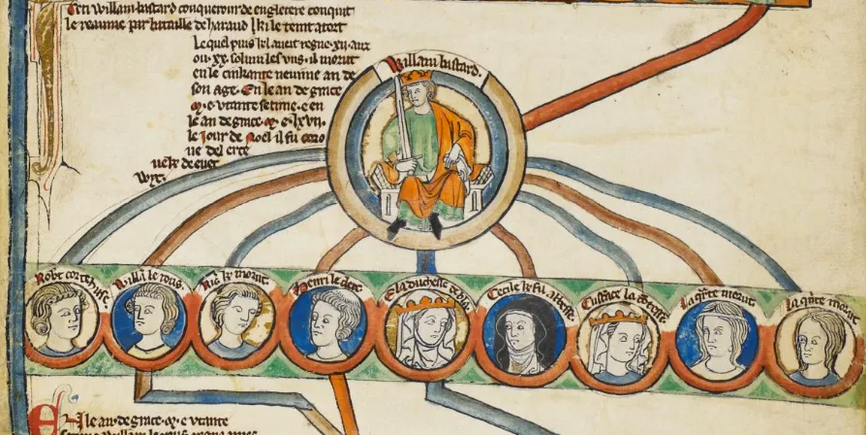
Theoretically, the crown would pass from father to son in a straight line all the way down from William I to Charles III. In reality, the crown has never passed from father to son for more than a couple of generations at a time. Even Charles himself did not inherit from his father. Thus, the theory has to be adjusted as not all fathers were kings and not all fathers had sons. There are plenty of deviations in the British royal family where the crown passed to a nephew, a second cousin once removed, and the occasional daughter. The transmission of the crown within the same family is therefore called the [insert fanfare here] ‘Hereditary Principle’ instead of ‘Absolute Primogeniture’ (the passing of titles from father to son).
England derives much of its culture from its history and tradition and the Royal Family is the physical embodiment of those. They live in the palaces and castles built by kings long past, they are guarded by soldiers dressed in traditional uniforms, and their ceremonies are rich in pomp, drawing from the long history that they represent. When it became clear that action would need to be taken against Andrew Mountbatten-Windsor, the Palace stressed the difference between the monarchy and the royal family but the two are utterly indivisible, as demonstrated by the fact that statements from and about the royal family are delivered by the office of “the Palace.” The monarchy’s power and relevance today is entirely tied up in their place in history and so they depend and rely upon their continuous and unbroken line from William the Conqueror to the current monarch.
In reality, that line has not been continuous or unbroken. The monarchy as an institution has changed several times over through Civil Wars, depositions, and sometimes by the monarch just straight up not having a child to whom they could pass the crown. The people who have assumed the crown after these instances could at least have traced their lineage back to William I, and so, the ‘Hereditary Principle’ has persevered.
Divine Right of Kings
When you wear the crown, you are transfigured. Apologising sullies not just your dignity but God's, whose will it is you are who you are.
Queen Elizabeth, The Queen Mother, The Crown S5E4
The second principle upon which the monarchy stands is that of the ‘Divine Right of Kings’. It’s right there in the king’s official title; Charles III, by the Grace of God, King of the United Kingdom et cetera. There are, of course, many religions and faiths with many Gods, but the monarch is hardly there by the will of all of them. In a gesture to modernise and diversify the entirely Protestant coronation ceremony, Charles III involved the leaders of a number of religions and faiths. But the service remained Protestant, conducted by a Protestant Archbishop, in a Protestant church building. It was the Protestant Church of England that he promised to uphold and thus fulfils the will of the Protestant God that chose him, as had about four hundred years of monarchs before him.
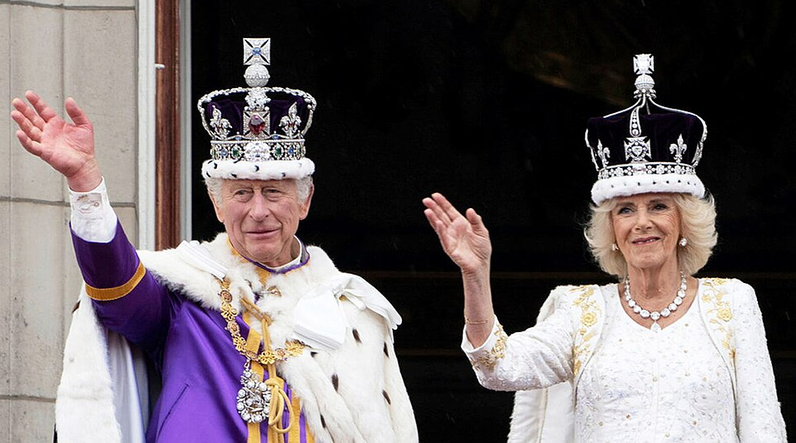
Divine Right of Kings sounds like an ancient concept, and indeed the history of the monarchy is inexorably tied up with that of the church. However, there is a difference between the church and God, even the one they claim to worship. The monarch being directly chosen by God to be their representative on earth is an idea adopted by later kings. The English monarchy stretches back almost a thousand years but it is less than half of that that has seen them claim to be God’s chosen one.
The Western church has always been an integral supporter of the monarchy, but they had their own representative in the form of the Pope. The Pope of the Roman Catholic church dominated medieval politics and the English monarchs wanted to keep him on their side. But they were not selected by the Pope to rule. The throne was passed solely through a blood claim, the hereditary principle, described above.
It was Henry VIII who changed things up when he decided to break with the Catholic church in order to marry his mistress and take the church’s immense wealth. He also claimed he needed to reform the corrupt institution, it just so happened to time with him wanting to marry his mistress and take the church’s immense wealth.
When Henry broke with the Roman Catholic Church, he established his own church; The Church of England, with himself as head. Laws were passed recognising him and his descendents as such. It’s important to note that these laws didn’t say that he was God’s representative on earth, they simply recognised that this was an established fact. English law did not make Henry VIII God’s chosen king. He had always been so, the law was just catching up. It is also from Henry VIII that we get the address “Your Majesty” for monarchs. His father and those who preceded him went by “Your Highness” or “Your Grace.”
His father and the eighteen monarchs who preceded him hadn’t ruled through Divine Will but thankfully, at the time it was introduced, it just so happened that the man God wanted to be on the throne, was already on the throne. What a blessed coincidence. In the five hundred years since, the throne has passed semi-directly within the same family, all of whom have reigned safe in the knowledge that God chose them specifically to occupy the role they were born into.
Again, it sounds like I am making fun of it, and I am (a little bit). But the problem with having ancient traditions and custom uphold the authority and power of a modern institution would seem to be obvious. British society likes to think itself as a meritocracy where the best person for the job gets the job. Our system of government is democratic, yet the head of that government has always been the ultimate nepo baby, the absolute antithesis of the values modern Britain has come to hold sacred. And one thing that society does not hold sacred, is the God of the Church of England or the idea that said God might have chosen Charles III (who at least waited for his wife to die before he married his mistress – no break with church required) to be lord and master over them. Which is why, and we come full circle, when accusations the likes of which are levelled against the King’s own brother, a man also in his position because of the hereditary principle and because God supposedly wants him to be there, it is extremely difficult for an ancient institution to justify its existence using modern concepts. It is also why every single royal crisis, minor and major, for the last thirty years has sparked the question; is this the end of the monarchy?
Liked this article? You can support me via my Patreon and join me in picking apart history, behind the scenes research, bibliographies, and have the opportunity to pick what I write next!