In our penultimate Reign post, we look at the star herself; Mary, Queen of Scots. We have already considered the political landscape in which Mary found herself, so now we turn to the personal. The fourth season shows Mary’s hunt for a husband, her second marriage to Henry Stuart, Lord Darnley, the birth of their son, and Darnley’s murder. Had the series continued, it would have shown her ill-fated third marriage to James Hepburn, Lord Bothwell. Due to the rapid cancellation, Mary’s romantic storyline with Bothwell is never resolved, when historically it was this third marriage that cost her her crown and ultimately her freedom.
Unlike much of Reign thus far, the parts of season four that deal with Mary aren’t entirely inaccurate. Some of her plot lines are taken straight from the history books which is a refreshing change. Unfortunately, they are book ended by the usual Reign insanity we have come to know and love. So without further ado…
Meeting Darnley
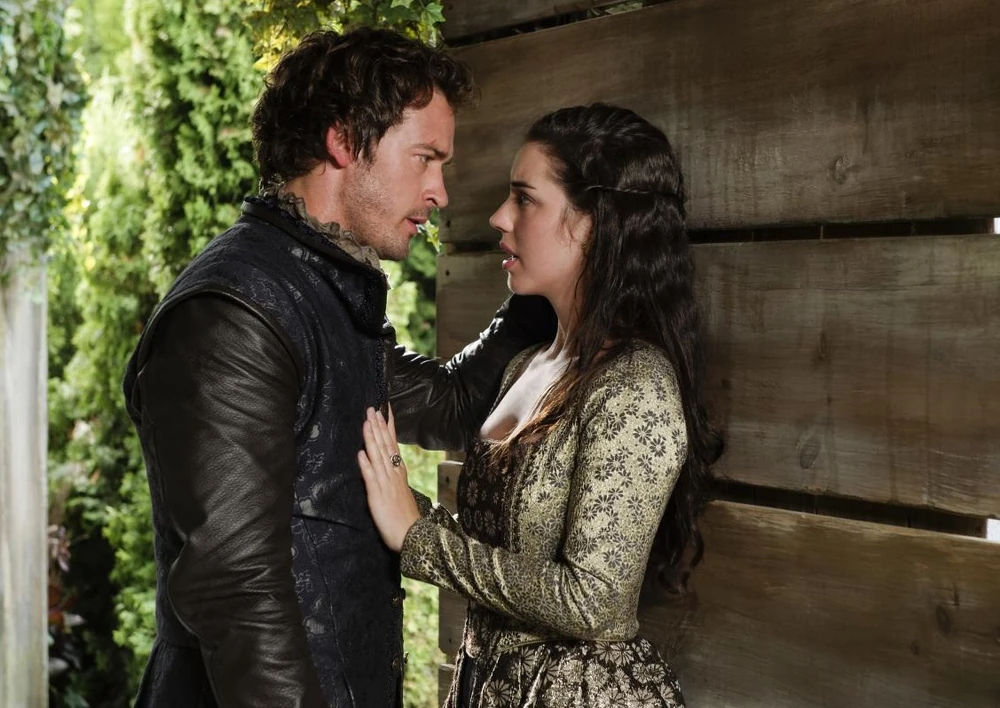
Mary spends much of season 4 of Reign planning to overthrow her cousin Elizabeth so that she can sit upon the English throne. To that end, she sets to finding a husband. Her cousin, Henry Stuart, Lord Darnley, is an obvious and favourable contender. Marriage to Darnley would strengthen Mary’s claim and put their children in a pretty strong position too. However, Mary is in love with the English ambassador, Gideon Blackburn, and Darnley has his own lover. They both make plans to marry their lovers with Mary going so far as promising abdication, and relinquishing her claim to any throne in favour of a quiet life with her non-royal husband.
In true dramatic fashion, Darnley and Mary’s respective plans for a quiet life fall through. They decide that, actually, getting married and leading a military coup against the Queen of England really is the only path open to them. For a brief moment, it even looks like they might be in love with each other. However, Mary soon discovers that the man she has known for all of five minutes isn’t the man she thought he was. She starts having second thoughts about the wedding, to the point where she begs Catherine de Medici to get her out of the engagement. Unfortunately, at the point where she realises just how much she hates Darnley, (and is in love with Lord Bothwell) she discovers that she’s pregnant and the wedding goes ahead.
We can discount much of the personal drama surrounding Mary and Darnley. Neither of them were romantically involved with anyone else when they met. Both of their romantic partners in Reign are entirely fictional. Darnley was not hoping to marry and English lady, and Mary was absolutely not about to abdicate her throne to elope with the English ambassador. Meanwhile James Hepburn, Lord Bothwell, was indeed a significant noble at court but was in no way romantically linked with Mary.
Darnley was the son of Scottish nobility but English-born. His father, the Earl of Lennox, had gone into exile in England the year before Darnley’s birth to escape charges of treason against the Scottish crown. Darnley’s mother had been born to Margaret Tudor and her second husband which gave Darnley a claim to the throne of England. Mary, Queen of Scots, was also a grandaughter of Margaret Tudor through her first marriage to the James IV of Scotland. On its own, Darnley’s claim to the English throne was extremely weak as it was through a junior, maternal line. However, marriage to Mary would significantly improve that situation, something which was no doubt in Darnley’s mind when he visited the Scottish court in February 1565.
This was not the first time Darnley and Mary had met. He had visited her after the death of her first husband to pass on his condolences and even then Mary had noted how attractive he was. Initially, Queen Elizabeth of England suggested that Darnley visit in 1564 Mary as part of an elaborate political game which she hoped would destabilise Mary’s search for a husband on the European stage. The move very quickly backfired, as if Mary and Darnley were to marry their claim to the English throne was potentially stronger than her own. Elizabeth was playing with fire in trying to dictate Mary’s choice of husband and ultimately she got burned. Until now, Elizabeth had suggested that if Mary gave her final say in who became King of Scotland, Elizabeth would acknowledge Mary as her heir. In a moment of panic, Elizabeth rescinded the suggestion and Mary decided that her marriage was therefore none of Elizabeth’s business. She was already extremely attracted to Darnley, believing herself to be immediately in love with him, and within weeks of meeting him she began making preparations to marry him.
While Mary believed Darnley to be a perfectly fine gentleman, the rest of the world knew that Darnley was entirely unsuitable as a companion, husband, and consort. He was unpleasant, arrogant, known for sleeping with anything that moved, and frequently overindulged in drink. For the first few months of his time in Scotland, Darnley had managed to hide the worst of his behaviour. With four weeks to go to the wedding however, he stopped pretending and Mary understood exactly what kind of person she was marrying. We know from the date of her son’s birth that it was not pregnancy that forced her hand. While she is documented as being desperately unhappy at her imminent nuptuals, she felt as if Elizabeth had forced her hand. Elizabeth was now just as desperate to stop the wedding but if Mary agreed then she would have been admitting that the English throne dictated to Scotland. No matter how much she may have wanted an out, on the 19th July 1565, five months after he arrived in Scotland, Mary and Darnley were married.
Marrying Darnley
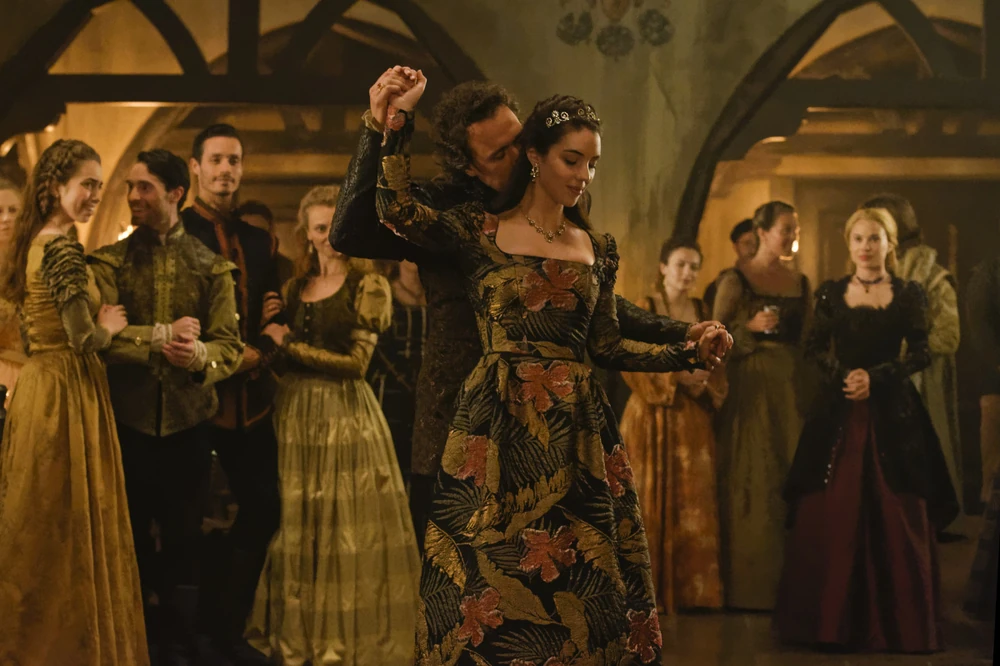
Reign shows Mary’s marriage to Darnley as completely acrimonious. Mary despises her husband who promises to become everything she most hates and fears. Unlike his vows to cherish her or forsake all others, this is a promise he intends to keep. Darnley becomes fixated on obtaining ‘The Crown Matrimonial’ which would not only allow him to rule Scotland jointly with Mary, but would also grant him the throne if anything unfortunate happened to his wife.
An increasingly desperate Darnley resorts to plotting with Mary’s enemies to take her power as his own, but Mary protected by Lord Bothwell and her confidante, David Rizzio, thwarts all his attempts to put her aside. Darnley’s plans come to a head when he gathers his supporters, breaks into Mary’s chambers, and ends up murdering Rizzio in front of her. Mary manages to escape to Bothwell, rallying her supporters to arrest the traitors. She promises to be rid of Darnley so that she can marry Bothwell.
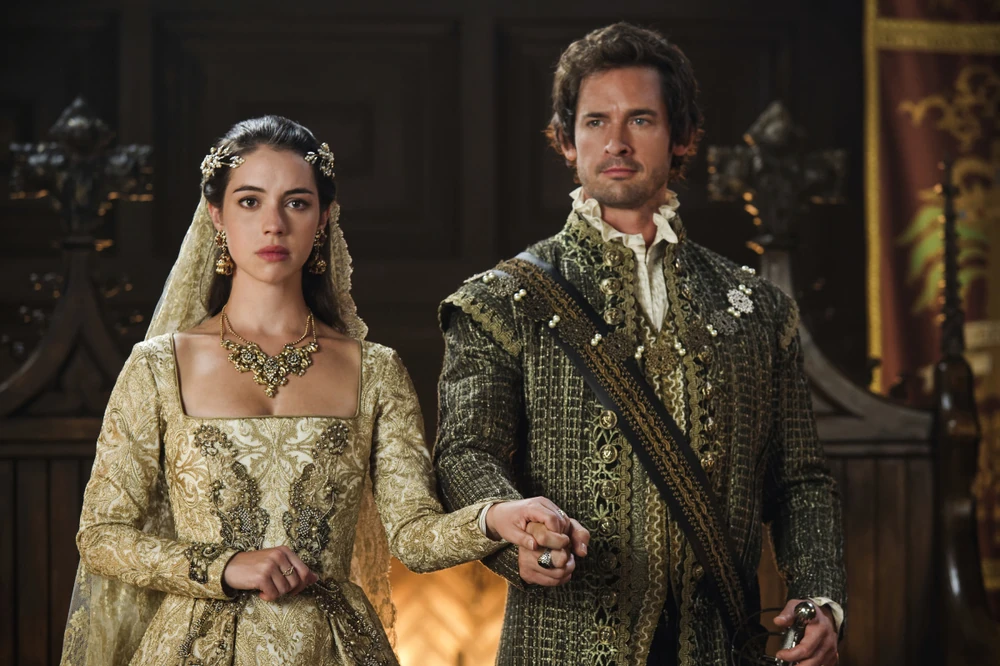
Historically, while Mary might have taken a minute to see the flaws in her now husband, those around her had not. Darnley was deeply unpopular from the outset. Nevermind the fact that Darnley himself had been raised to believe that he was the centre of the universe which made him personally repellant, his father was a known traitor. Beyond his claim to the English throne, he had little to recommend him to that of Scotland. Upon their marriage, Mary’s half-brother and long time regent, James, led a rebellion. It failed and, ironically, he would exile himself to England to escape the charges of treason. Incidentally, it was Bothwell, who had been out of favour for a time, who was recalled to court to deal with Mary’s brother. The two men had been feuding for some time and Mary believed Bothwell to be the perfect man to put against James. She wasn’t wrong and it would mark the start of Bothwell’s prominence at court. Mary and Bothwell would become close allies, though there is nothing to suggest that they were more than that. A year after Mary’s own wedding, Mary was guest of honour at Bothwell’s to Lady Jean Gordon, someone who does not make an appearance in the series.
In a rare moment of accuracy in Reign, the early months of Darnley and Mary’s marriage were dominated by his desire for more power. Specifically the crown matrimonial. This was a legal device in Scottish law which would grant the queen’s consort the right to retain the Scottish throne even if his wife died. When the French had sought it for Mary’s first husband, Francis, it was under the condition that if he were to outlive Mary and marry another, his descendents by another wife would be heirs to the throne. The Protestant part of the Scottish court objected and as it was, Francis died early anyway, so the plan came to nothing. It was the same faction that later sided with Darnley, promising him power if he supported them against Mary. Later, Darnley really leaned into a performative conversion to Catholicism to garner support from the Catholic factions. Neither of his attempted alliances got him any closer to what he wanted but they did successfully alienate him from his wife.
By Christmas 1565, just five months after their wedding, a pregnant Mary and Darnley were living separately. Three months later, in March 1566, Darnley and his latest group of supporters had determined that Mary’s secretary, David Rizzio, was the source of all of Darnley and Scotland’s woes. While Rizzio was having a private dinner with the queen, Darnley and his supporters broke into her chambers and murdered Rizzio in front of her. Reign did the scene justice. Darnley held Mary back and was so reluctant to involve himself in the act that it took someone else taking Darnley’s dagger and stabbing Rizzio with it to tie him to the crime. In the aftermath, Mary did indeed manage to convince Darnley that they needed to escape together.
Darnley seems to have genuinely believed Mary when she said that he was as much in danger from the rebels as she was. He was surprised then when after she was safe in Dunbar castle with her supporters and Bothwell that she should turn against him so quickly. But by now Mary had seen proof that Darnley’s reluctance during the actual murder of Rizzio was simply the result of his nerves deserting him rather than finding himself in a situation that had nothing to do with him. She had proof not only of his involvement but that it was all part of a ploy by Darnley to acquire the crown matrimonial against Mary’s wishes. She could not significantly move against him without compromising the legitimacy of her unborn child, so for now, Darnley was safe. But he was kept at several arms’ length. In the will Mary drew up in the event of her death in childbirth, Bothwell and other nobles featured within the government of the country, Darnley did not.
A final thought on Darnley and the whole Rizzio murder. There was a detail that I was surprised Reign didn’t take full advantage of for the drama. It seems that Darnley, who was openly bisexual, and Rizzio were themselves lovers. There are multiple contemporary accounts to this effect and they were discovered in bed together several times. Given that Darnley’s conspirators used the argument that Mary and Rizzio were lovers as a means to draw him into their conspiracy, the drama seems ready made.
Murdering Darnley
Back in Reign, Mary might have committed herself to Bothwell but she soon realises that ridding herself of her husband, the father of her child, and the King of Scotland is not so easy. Darnley’s emotional instability develops into full blown insanity and sets about to protect himself. Guided by the ghost of his dead lover, he locks his fellow conspirators into a building and sets fire to it, killing them all.
While Darnley is having a BBQ, Mary goes into labour. Things take a turn for the worst and it looks like neither mother or child will survive but as Mary reaches the brink of death, Bothwell gives her a motivational speech which brings her back. Propped up by his mother, an insane Darnley tries to take the throne again. When he fails, he kidnaps the newborn Prince James. James is recovered but Mary realises that the only way in which she can protect herself and be with Bothwell is to have Darnley murdered. Which Bothwell promptly does! Poorly! They are both immediately arrested for the deed, and this likely would have been the next major storyline followed had the show not been cancelled at this point.
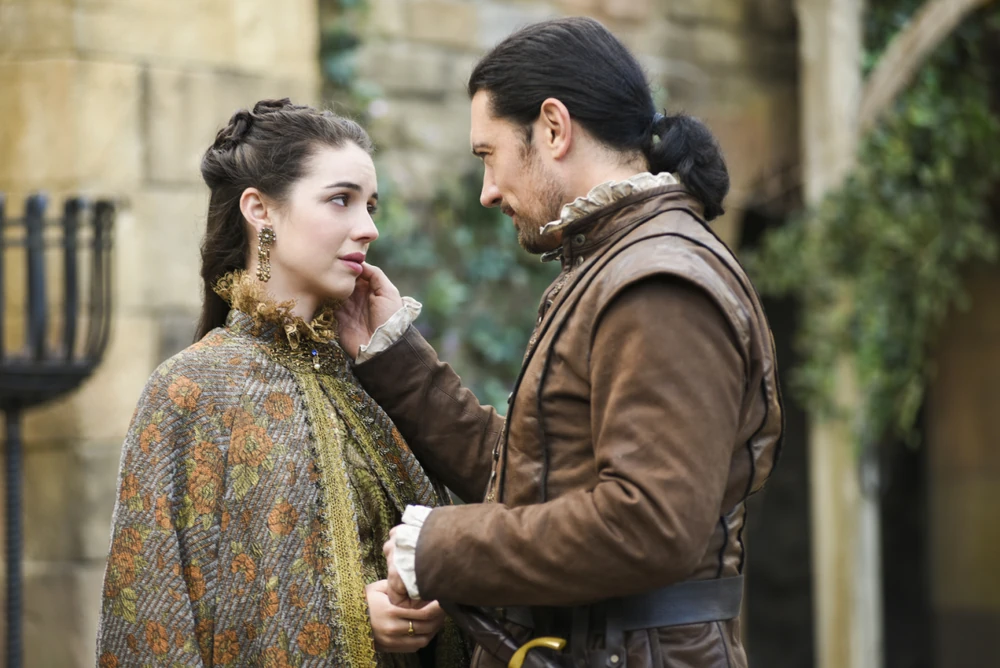
As with the Rizzio murder, there is a grain of truth to Reign’s depiction of Darnley’s downfall. For a start, he was ill. He wasn’t quite as mentally unstable as portrayed. There were no visions of dead lovers or setting fire to the Scottish nobility, but his behaviour was becoming increasingly unhinged. His issue, as it had always been, was his perceived lack of power. His situation was exacerbated after Mary gave birth to their son, James. As an aside, Mary’s birth experience was difficult but not as near-fatal as Reign portrays. Bothwell was not present.
With a healthy male heir in the cradle, Mary found herself with no reason to maintain any kind of civility to her husband. Darnley had never been more desperate and it showed in his behaviour. He began publicly accosting his wife, arguing with her and demanding his due. One of his many issues was that nobody knew what he meant by ‘his due’, and whenever someone asked him what he meant, he didn’t have a coherent response. When he started raving about leaving Scotland to set up a rival court abroad, Catherine de Medici in France received several letters warning her of Darnley’s apparent insanity.
While Mary tried to restore the divisions at court that had led to Rizzio’s death, Darnley’s treatment of his wife earned him a new level of contempt from the court he wanted so desperately to rule over. When Mary fell gravely ill he did not visit her, he likened her to a mare only good for breeding, and managed to alienate all but his most diehard supporters.
There is some debate over how much Mary knew about what was going on behind the scenes, but we know that a group of nobles, Bothwell among them, decided that the easiest way to rid themselves of Darnley was to kill him. Which is exactly what they did.
In the early hours of 10th February 1566, the house in which Darnley was staying exploded. The place had been packed with gunpowder and Darnley’s body recovered in a nearby orchard. The first thought was that the explosion had killed him and thrown his body clear of the wreckage. But without a single mark on his body beyond that around his neck, it soon became clear that he had been dragged to the orchard and strangled to death. Bothwell was immediately indicted for his role in the murder but acquitted by the Privy Council. Mary’s involvement, if she even was, remains an historical mystery but her marriage to Bothwell within three months of Darnley’s murder served to implicate her tremendously and would ultimately lead to her downfall which is where the series leaves us.
In the final part of this series, we look at what events we were denied Reign’s dramatic treatment of and how Mary ultimately found herself on the executioner’s block. RIP.
For more BTS, bibliographies, and fun picking apart history, you can join me on Patreon.