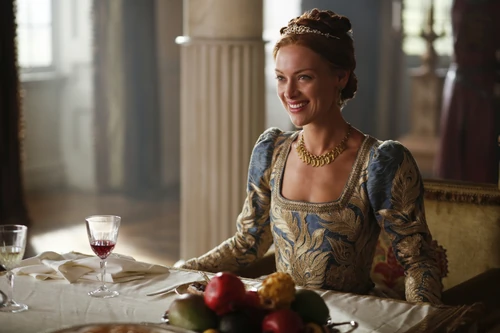
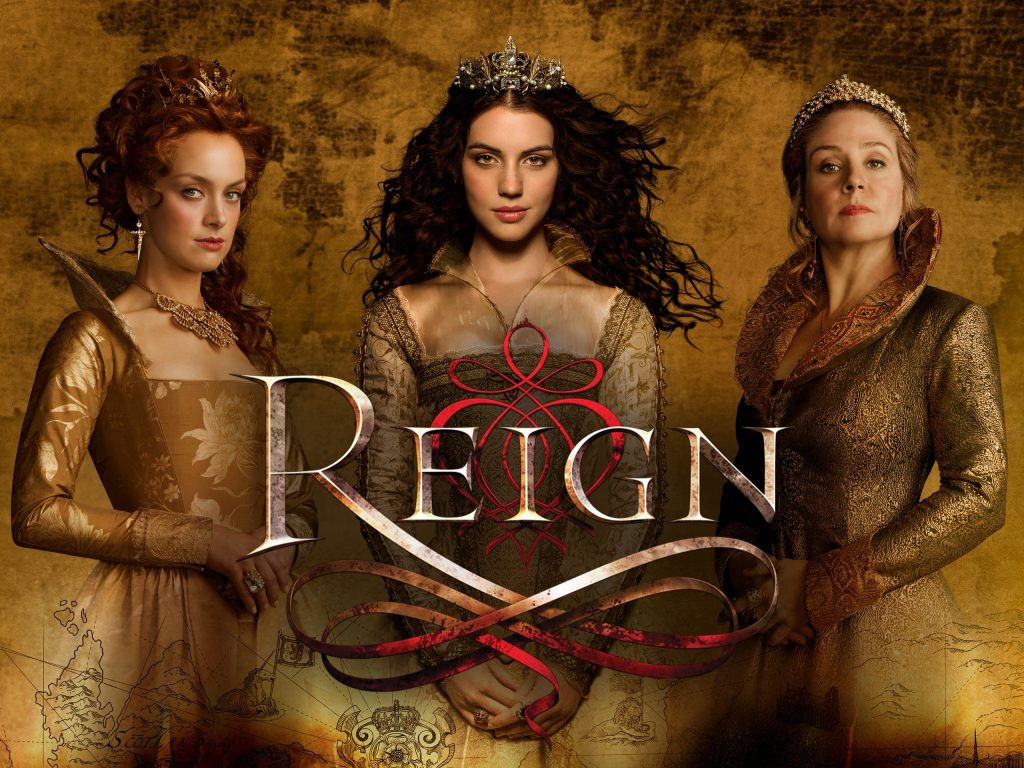
It took a minute, but I have finally finished Reign. Ostensibly showing the life of Mary, Queen of Scots, Reign was famous (or infamous) for its anachronisms and its sheer drama. It took historical fiction to new heights with increasingly ridiculous and outlandish storylines that had little to no bearing on reality. But boy, was it entertaining.
The fourth season of Reign would be the final of the show. It was cancelled due to increasingly low ratings. Unfortunately, news of the cancellation was delivered during the filming of what they then learned would be the final episode. The result was an incredible hasty ending to what had been a particularly wild season. Twenty-one years of history were condensed into a two minute conversation to justify Mary’s ultimate fate; execution at the hands of her cousin, Elizabeth I.
As a result of the abrupt ending, storylines which had been established were cut off without hope of pay off, which only added to the insanity of a season that was already pretty insane. In fact, the season is so insane that this post is simply an introduction to everything manufactured and dramatised in Reign’s final season. You can join me on Patreon for behind the scenes research, and the chance to discuss the madness that was this show.
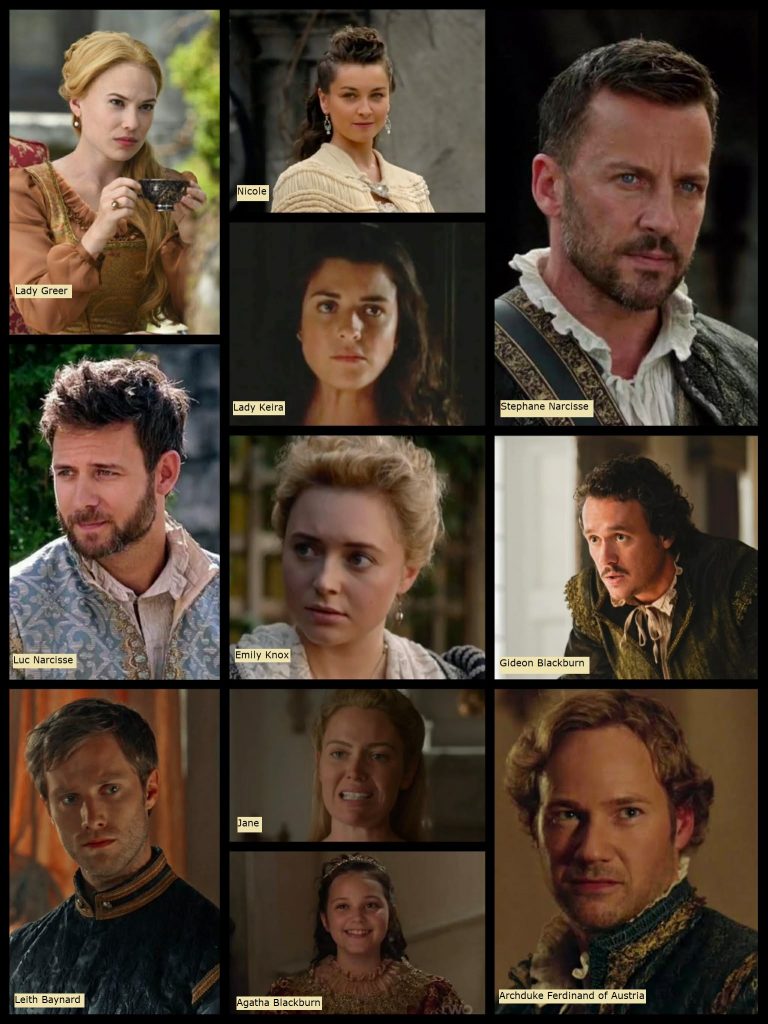
Nobody pictured above existed and, as such, none of the storylines in which they are involved happened. That isn’t to say that the people who did exist are in any way recognisable in the show, but nothing that any of these characters did happened in history. They are not fictional counterparts of historical people, they are not amalgamations of people who did exist, they’re just straight up inventions. Their stories, naturally, intersect with the characters who did exist but that is not to say that anything they were involved in actually happened.
Just to summarise things that absolutely did not happen:
- The French King, Charles IX, did have a mistress in history, but she was not a peasant girl, and she did not rule the court through him.
- Lord Darnley was known to have had numerous lovers of both genders, but he did not have one special lover who he wanted to marry.
- Stephane Narcisse did not castrate John Knox. (The things I find myself writing sometimes.)
- At the time Reign is set, Princess Claude was happily married and living in Lorraine. She was not involved in a messy love triangle with the Lord Chancellor’s son and a soldier.
- There was no Archduke Ferdinand of Austria at the time for Queen Elizabeth I to court. She did not formally announce her engagement to any of her suitors and certainly did not take one as her lover.
- Mary, Queen of Scots did not take the English ambassador as her lover. Nor did he then become Elizabeth I’s lover after his attempt to marry Mary failed.
- Children weren’t generally allowed at court. English politics did not come to a standstill because the English ambassador’s daughter died.
- John Knox’s wife did not have an affair with James Stewart, the Queen of Scot’s brother.
- Elizabeth I did not murder her own maid by bludgeoning her with the Rod of Mercy.
Mary vs Elizabeth
Mary and Elizabeth will be getting their own full length posts just for them to discuss their real stories and character. This part will just focus on their continued conflict.
The Show: Mary wants to be Queen of Scotland and England, and she is prepared to go to any lengths to get her way. She visits Scottish towns along the border to ensure their protection and support. While she’s at it, she sways English border towns to declare themselves as part of Scotland. She marries her cousin Henry, Lord Darnley, who shares a claim to the English throne and the two plan to take the Scottish army into England and overthrow Elizabeth militarily. To that end, Mary even takes up swordfighting lessons so that she can personally fight Elizabeth if it came to it.
Meanwhile, Elizabeth is just as belligerent. She sends assassins after Darnley, she sends soldiers to raid the Scottish border towns, and at one point plans a full invasion of Scotland. She calls it off at the last minute because a dying child tells her that actually, Mary is a nice lady and shouldn’t be attacked. Meanwhile, Mary does exactly the same thing. She sends a contingent of men into England to take Elizabeth prisoner, while her army and navy are ready to follow up with military action. She also calls it off at the last minute.
Eventually, they both come to the realisation that they can’t win through an invasion, but neither country will be secure while the other queen lives.
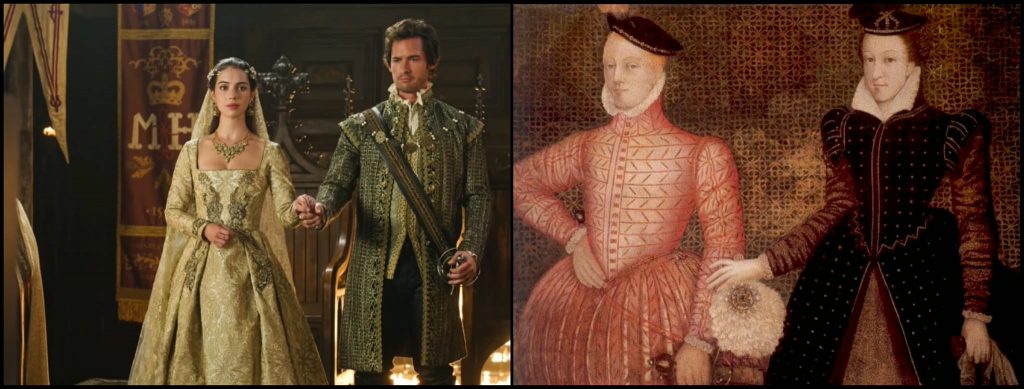
In History: Scotland and England had an antagonistic relationship for centuries before Elizabeth I, though things definitely escalated under her father, Henry VIII, who sent armies into Scotland. His belligerent tactics were an attempt to secure Mary’s hand in marriage for his young son, the future Edward VI. Obviously, he was unsuccessful as Mary married the dauphin of France but it certainly made relations between the two countries a little fraught. That said, Elizabeth’s England and Mary’s Scotland were not as fragile as the show makes it seem. The borders were well defined, and yes, raids were common on both sides, but towns didn’t and couldn’t just switch which country they belonged to on a whim.
While it’s true that Catholic Mary presented a threat to Protestant Elizabeth, Mary’s country and government were themselves Protestant, and far happier to ally themselves with Elizabeth than their own queen. The two might have regarded each other as an irritant a little too close to home than they’d like, but ultimately they were far more preoccupied with their own affairs to attempt an invasion of their neighbour.
John Knox
The Show: Protestant priest John Knox hates Elizabeth and Mary. Like, he really hates them. An incredible misogynist, Knox is affronted at the idea of a queen ruling in her own right. Mary, of course, also commits the additional offence of being Catholic but it’s the whole woman thing that he takes real exception to. So much so that Knox spends all of his time and energy plotting to kill, undermine, and overthrow them. As a Scot, his focus is Mary but his best plans involve both queens being murdered. To that end, he is revealed to be the mastermind behind the season 3 finale which saw Mary’s best friend, Lola, executed for trying to assassinate Elizabeth.
Aware that Knox is the sharpest thorn in her side, Mary instructs her brother, James, Earl of Moray, to seduce Knox’s young wife, Emily, to learn his secrets. James does so, causing Emily to fall in love with him in the process, and they manage to thwart Knox’s plans for a while.
While Mary attempts to deal with Knox with some gold old fashioned justice, she cannot find any criminal charges that stick. Lola’s grieving widow, Narcisse, decides to take matters into his own hands and castrates Knox. He presents Knox’s manhood in a box to a horrified Mary. Knox recovers by the end of the season in time to arrest Mary for the murder of her husband.
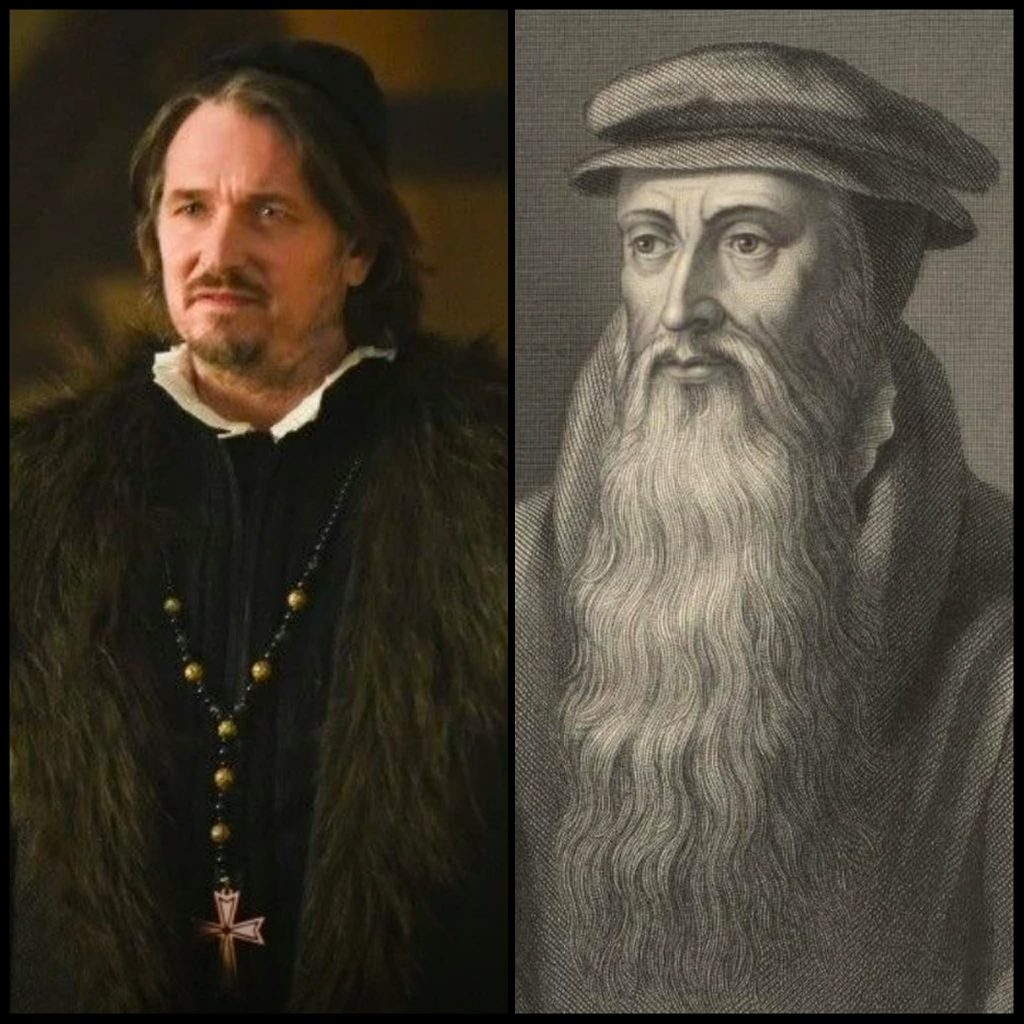
In History: I’ve said before and I will say it again; to me John Knox has a singular honour of being a mysoginist at a time where the status quo considered women the inferior sex. In 1558, he wrote his most infamous work The First Blast of the Trumpet Against the Monstrous Regiment of Women. He was specifically targeting the Catholic Queen Mary I of England and the regent of Scotland, Marie de Guise, so it was somewhat awkward when Mary I died the same year. Elizabeth I became Queen of England and Knox might have looked forward to working with her as a fellow Protestant, only to find that she had read his work and did not appreciate his views on women in power. She never forgave him and made his life difficult whenever the opportunity presented itself. He was permanently barred from England which utterly separated him from the Protestant Reformation he greatly wanted to be a part of. He later lamented in a letter that his work had cost him all his English friends (but he maintained that he was absolutely right that women couldn’t rule).
Knox was, however, a constant source of antagonism to Mary, Queen of Scots. He didn’t have any formal position at her court, but he was nonetheless a frequent visitor and extremely influential among the Protestant court. He did not want Mary on the throne and preached against her frequently. While Mary was often frustrated by him, even the Protestant nobles supported her. Knox preached that Mary would impose Catholicism on her subjects, however, she and her brother worked together to maintain religious tolerance. When the Catholic threat never materialised, Knox lost some credibility. Knox’s popularity took another knock when he, a man of over fifty, married one of Mary’s own cousins, the seventeen year old Margaret Stewart. The Queen was angry that they had not sought her permission which was required for relatives of the monarch to marry while his friends and supporters considered the age gap a scandal.
He was not at court for Darnley’s murder and the aftermath. By the time he returned, Mary had already been forced to abdicate for her role in the murder and was in the custody of her Protestant nobles. Knox called for her death but to no avail.
In an ironic twist of fate, Knox got exactly what he wanted when Mary abdicated, only for her absence to plunge Scotland into a civil war which would only come to an end the year of Knox’s death. He was not nearly as disruptive as portrayed in the show, and he was never tortured and castrated by the Lord Chancellor of France, who had likely never heard of him.
Meanwhile in France...
The state of France is going to get its own post too, because there is a lot to unpack.
The Show: Mary spends the whole season in Scotland but we still hop across the sea to check out the drama in the French court and there is so very much drama to check in with. Mary’s former mother-in-law, Catherine de Medici, tries to hold the country together while her son, Charles IX, struggles with kingship. He’s mentally broken after his experiences in the previous season and completely avoids all of his kingly duties. Instead, he spends his time hanging out with the corpses of dead sailors. He regains his hold on the throne and his sanity through the efforts of his mistress, Nicole, but in the interim, the Queen of Spain (his sister) has decided that France would be better ruled by Spain and invited their younger brother, Henri, to court. The plan is for Spain to force Charles to abdicate in favour of Henri, who will then rule as a Spanish puppet.
The two brothers tussel for control of the throne and Nicole’s affections, Catherine de Medici resorts to black magic to keep the throne in the family and free from Spanish influence. Her sons insist on making things difficult by antagonising and provoking England at every opportunity. Because of the abrupt ending to the series, the show ends with both Charles and Henri expected to die. The House of Valois is poised to fall but a witch advises Catherine that if she brings her daughter, Princess Margot, back to court, the family will be saved. Margot is introduced as a character with nine minutes left of the final episode and as such we never see the resolution, or how Margot will rescue the House.
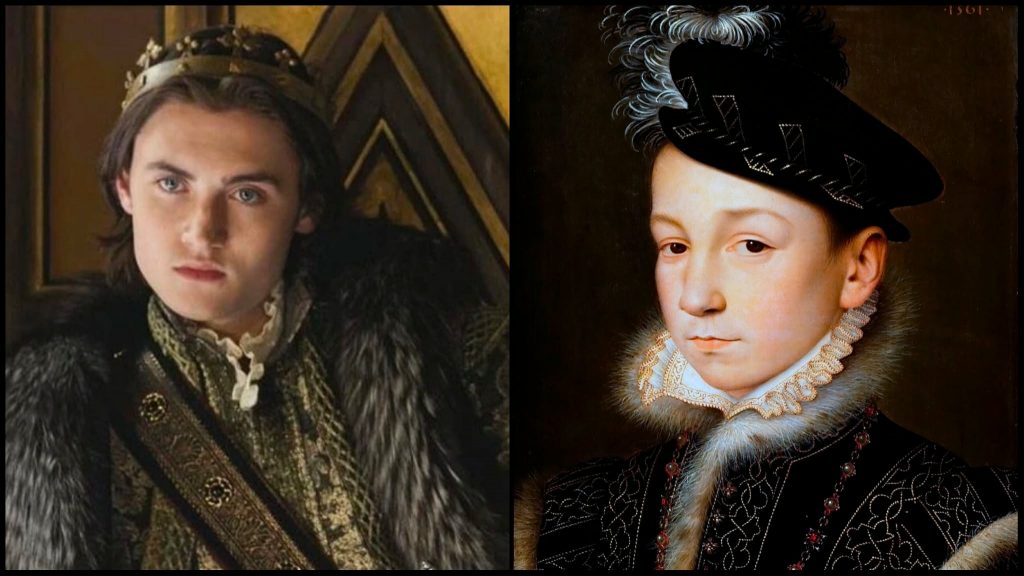
In History: Catherine de Medici was indeed a force to be reckoned with at the French court at this time, not least because King Charles was still a young teenager of fourteen/fifteen. His brother Henri was a year younger still, so they were hardly fighting over women and the throne. Their sister, Queen Elisabeth of Spain (Leeza in the show) did not try to make France a vassal state of Spain. She had little interest in the politics of the country in which she was queen, let alone the one she had left behind. She actually remained close to Mary, Queen of Scots, and would have been a safe haven for her former sister-in-law when she escaped Scotland, but she unfortunately died in childbirth before any plans could be made.
Charles would reign for a total of fourteen years and later, he would be tormented by poor mental health. But all of that was a long time after any of the events that date Reign. One thing that is true, though heavily exaggerated, naturally, is Catherine de Medici’s unpopularity. As the regent for Charles, she ruled at the outbreak of religious civil war which would prove devastating for France. When Charles came of age, he still relied on her to govern the country, and after his death, his brother Henri would do the same. While her methods and decisions were criticised both by contemporaries and later historians, it is accepted that if it had not been for Catherine then the House of Valois would have lost the throne early, unable to survive a young Francis’ succession by his even younger brother.
Princess Margot would go on to have an extremely eventful life but again, at the time Reign is set, she was a child of eleven. In some ways she could be seen to have been the future of the Valois royal house as the witch suggests in the show. After her succession of brothers died young and exhausted themselves, she would become Queen of France when her husband and cousin Henri became its king. While her husband would go on to be one of France’s greatest kings, Margot hardly shared in the success. The marriage was unhappy from the off and the two had separated before he even became king. The two were notoriously unfaithful and it seems Margot could not have children. After living separately for twenty years, they finally had their marriage annulled. She retired to Paris and did not remarry. Despite Catherine de Medici’s efforts and numerous children, the Valois family died out with her children.
For more BTS, bibliographies, and fun picking apart history, come join me on Patreon. We’re going to be talking a lot about Reign for a while.