Nobody ever asks if Henry VIII was straight.
Henry VIII had six wives and several mistresses, and just like almost every king in British history, his heterosexuality is simply assumed. Suggest a monarch might have been queer, however, and suddenly every minute scrap of evidence is placed under a microscope entirely absent when considering heterosexual relationships.
In Part I of this series, I argued that asking whether a historical figure was “gay” is much harder than it first appears. Queen Anne and James I left behind an extraordinary wealth of letters, accounts, and contemporary observations, yet even then historians debate what they actually might have meant.
William II and Edward II present the opposite problem. Instead of too much evidence, we have too little. There are no passionate letters written in their own hands, no revealing diaries, and very little that allows us direct access to their personal lives. Surviving records from almost a millennium ago are hard to come by, and those that are are usually concerned with the law or the practice of monarchy, rather than the monarch himself. Historians are forced to rely on chronicles, financial records, and often conflicting accounts by men with political and religious agendas, writing about men with political and religious agendas.
In Part I, I asked what it was that made us speculate on the sexuality of particular monarchs and why historians are so reluctant to accept personal evidence. This time we consider two monarchs who didn’t have the decency to leave us salacious love letters. Without personal evidence, we must turn to the political. We must read between the lines of household accounts and determine whether chroniclers were interested in chronicling facts or their own feelings about historical figures. Most importantly, we ask when we consider this body of evidence, do we apply the same standards consistently to all relationships, queer or otherwise? (Spoiler alert: Absolutely not lol).
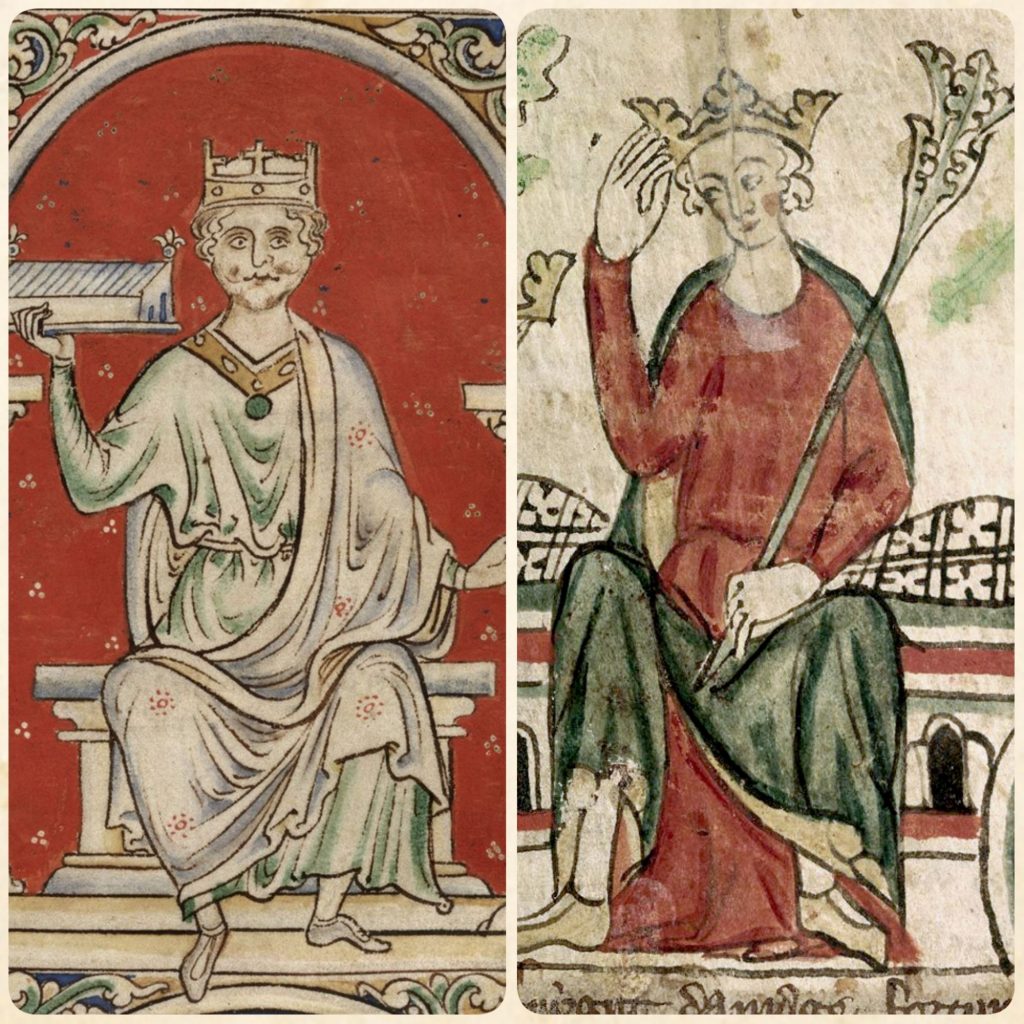
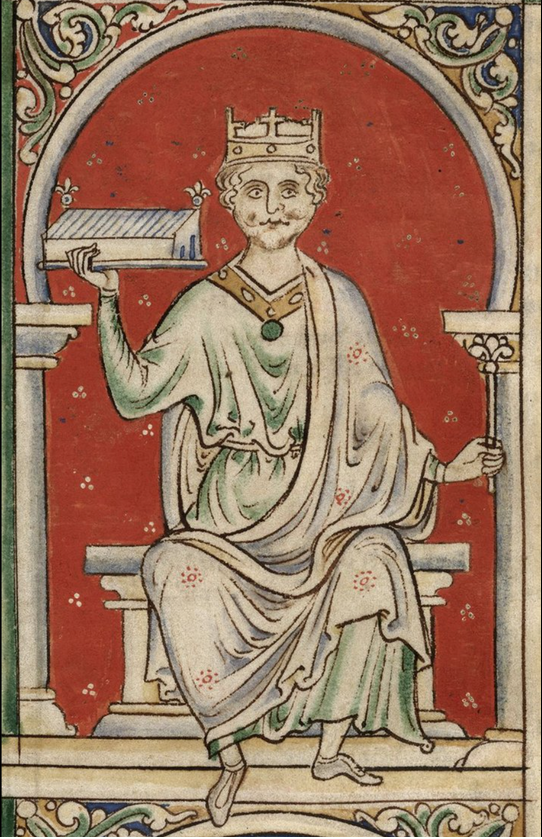
William Rufus
When William the Conqueror died in 1087, his eldest son, Robert Curthose, became Duke of Normandy. His second son, William Rufus, became King William II of England, and his third son, Henry, was given a substantial sum of money in lieu of land and titles. During his thirteen-year reign, Rufus was drawn into repeated conflicts with his brothers, particularly Robert, while consolidating Norman rule within England. Contemporary accounts describe him as charismatic and quick-witted, capable of diffusing politically tense moments with humour. He proved an able military commander, successfully repelling a Scottish invasion and expanding Norman influence in France. Although known for a quick temper, he was also regarded as generous. He faithfully honoured his father’s bequests and rewarded his followers from his own wealth rather than the royal treasury. These qualities might have guaranteed Rufus a place in the annals of history as a stable and competent ruler at a time when Norman rule was still being established in England.
However.
Within two years of his reign, Rufus and Anselm, the Archbishop of Canterbury, would find themselves in disagreement. Disagreement became dispute. Dispute became open hostility, and for the rest of his reign, Rufus would earn the staunchest of criticisms from the church. Unfortunately for him, at the time, the majority of contemporary written accounts were produced by the church. As a result, the surviving insight we have into the character of the king, outside of the royal record, is extremely hostile. He is painted as decadent, irreverent, and… Wait for it… Head sodomite of a court supposedly filled with depraved sodomites. Add to this the fact that he never married, and William Rufus finds himself the subject of that ever familiar question, “But, was he gay?”
Before we consider what the church said of Rufus and why they might have said it, let’s begin with an undeniable and curious fact: William Rufus never married. In this, he is unique among English kings. He is the only adult man to have sat on the English throne and remain a bachelor. This in itself is not proof positive that he must have been gay but it is certainly unusual. That he was unmarried when he ascended the throne, aged thirty, wasn’t particularly noteworthy. It was not yet the custom for royal families to marry their heirs young in order to beget the next generation and Rufus’ brothers did not marry until later in life either, Robert at forty-seven and Henry at thirty-two. Primogeniture, that is the succession of the firstborn son, wasn’t the established norm yet, and with two living brothers, Rufus likely did not feel any urgency in securing the Anglo-Norman dynasty. That said, it is noteworthy that he remained unmarried after becoming king. Upon his accession, it would have been entirely natural for him to have taken a bride, if not for the sake of begetting an heir, then at least to strengthen the kingdom politically. However, there is no evidence that Rufus engaged in any kind of marriage negotiations. He did not remain single because negotiations failed or diplomacy fell through. As far as we can tell, Rufus simply did not seek out a bride. The fact that he also had no known mistresses or illegitimate children is also enough to raise more than a few historians’ eyebrows.
The absence of evidence is not in itself evidence of anything. The fact that we cannot connect Rufus with any woman, even for the sake of a political alliance, is unusual but not necessarily proof that he was not romantically or sexually interested in women. When paired with the accusations of the church, however, it’s easy to see why history might speculate.
The King, The Church, and The Court of Fabulousness
Rufus and Anselm, the Archbishop of Canterbury, did not get on. At the heart of their dispute was the extent of royal authority over the church. The two would clash repeatedly throughout Rufus’ rule and Anselm twice went into exile. As one would expect, Anselm’s greatest supporters did not appreciate this and left us with extremely hostile views on Rufus’ character, kingship, and court.
Their complaints were numerous.
They believed him to be an irreverent sodomite, ruling over a court of irreverent sodomites. Rufus was thought to have spent his time with prostitutes and concubines, but in the gendered language of the time the critics specify male prostitutes and concubines. The court was a place of “unspeakable lust” and the nobles described as “effete” and “unchaste.” The fashions of the time and Rufus’ commitment to them were immoral with long hair, tight-fitting tunics, long sleeves, and extravagant shoes (to name but a few) the most egregious of offences. While they also complained about his neglect of religious duties, the financial exploitation of the church, and general profanity and irreverence, his alleged immoral behaviour was the foundation from which all other accusations stemmed.
The fact that many of the surviving sources that contain such observations are from supporters of Anselm, gives them an obvious bias, but it does not necessarily follow that the accusations lack truth.
Indeed, the charges laid against Rufus are remarkably consistent. One notable point is the language used against him. With Rufus, the language is repeatedly gendered in favour of men. While his brother Robert was being criticised for drinking too much and spending his time with harlots (feminine), Rufus was criticised for spending his time with harlots (masculine). There is other evidence to support a culture of promiscuity at Rufus’ entirely male court. When Anselm approached the king in 1094 with the intent to set up an inquiry into sodomy at court, Rufus angrily refused and was greatly offended, so we can see that he supported the activities, even if we don’t have evidence that he participated in them.
The church’s issue with feminisation among the noble class through long hair and fashion was not solely levied against Rufus. This concern stretched across Northern Europe with long hair being a particular focus. Anselm preached against the style, refusing to offer communion to anyone who refused to have their hair cut. In 1095, the Papal council of Clermont determined that men should have a “Christian cut” and those with long hair were to be excluded from the church, prohibited from receiving the sacrament, and had to be buried beyond sacred ground. These rules applied to all the courts across Northern Europe, not just that of Rufus, so it was not a response to the alleged homosexuality at his court. For example, the court of Philip I of France was also beholden to these rules, and the same council excommunicated Philip for abandoning his wife to marry his mistress (who was herself already married). It is tempting to conflate the condemnations of fashion, hairstyle, and sexuality, as many, many historians have done, but this reveals far more about modern perceptions of homosexuality than it does about the medieval Church. The accusations may appear frequently in the same sources beside each other but they remained distinct concerns. Tight-fitting tunics and long sleeves was a problem. Long hair was an affront. But William Rufus presided over an immoral court regardless of how fabulously they were dressed.
It would be easy to dismiss the surviving contemporary views of Rufus’ sexuality as nothing more than baseless insults. Yet the idea of homosexuality as a moral failing is contingent on the assumption that it has always been viewed that way. The churchmen who wrote about Rufus’ reign were not using “gay” as a catch-all slur. They were making a specific observation. They accused Rufus of being homosexual and allowing homosexual behaviour at court. They did not bring in accusations of exploitation, coercion, or sexual violence. There was no hint that anything that happened at court was non-consensual between any party. If their intent was purely to insult there were plenty of avenues available to them that they did not explore. Incidentally, even Rufus’ staunchest critics had good things to say of him. They praised his generosity, his magnanimity, his skill in battle. One of his most vocal critics described him as, “the most victorious king of the English.” Another referred to him as “exceptionally fortunate, indulged, and privileged by God.” In light of such comments, it’s hard to dismiss the accusation that Rufus had sex with men as a particularly hostile criticism.
Naturally, we don’t know what Rufus thought of his own sexuality, if he thought about it at all. When his successor, Henry I, became king, he allowed Anselm to expel men accused of homosexuality from court. That said, these men may not have been strictly attracted to men. They were married men with families at a court which lacked any kind of female presence because there was no queen. Even if we accept that queer activity was condoned at Rufus’ court, there is nothing that links him with participation. He did not have specific favourites. He did not single any man out for favour that could only be explained by a romantic or sexual relationship. While I have often spoken of bi-erasure when discussing historical figures, William II might even have been asexual and entirely uninterested in pursuing any kind of sexual relationship with any gender, something which would have been even more shocking to the church than any accusations of homosexuality.
Edward II and his "Favourites"
Where Rufus inherited an England still figuring out what kind of kingdom it was, Edward II inherited a kingdom forged by his father, Edward I, ‘The Hammer of the Scots,’ and ‘The Conqueror of Wales.’ England was a military powerhouse led by a strong, martial king. Unfortunately, Edward II was not quite so strong. Nor martial. Many historians argue that he was barely competent. His reign has inspired novels, films, television dramas and countless popular histories, many of which portray him as England’s first gay king. In these retellings, his downfall is presented as almost inevitable: a weak-willed monarch whose love affairs with men blinded him to the responsibilities of a king and a husband, which ultimately cost him his crown. It’s a compelling story, hence why we have so very many fictional works based around it, but it draws more from modern interpretation than contemporary evidence.
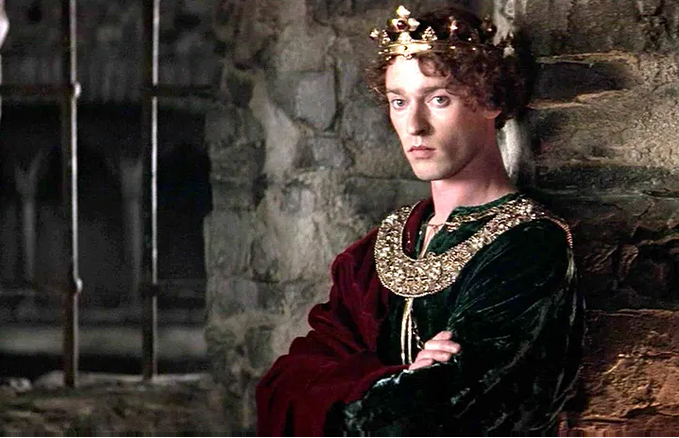
Unlike Rufus, Edward II’s close relationship with specific favourites was well documented. His relationships, first with Piers Gaveston, later with Hugh Despenser the Younger, would shape his political life. For modern readers, Gaveston and Despenser are presented as the answer to Edward’s sexual orientation. For contemporaries, the far more pressing and worrying concern was less what these men meant to Edward, but what these men meant for the kingdom. As far as the king was concerned, the personal was political, and Edward was particularly bad at separating the two. It was bad news for England, and it would prove to be even worse news for Edward himself.
Edward’s first favourite was Piers Gaveston. Gaveston was placed in the then Prince Edward’s household by Edward I, ostensibly to be a role model for the prince. We don’t know what the age difference was between the two, but Gaveston couldn’t have been that much older as the two were often described as peers. In 1307, between seven and nine years after Gaveston first joined the prince’s household, Edward I apparently became so concerned for the intensity of the relationship between the two that he banished Gaveston from the realm. Three months later, Edward I was dead, and the prince was now king. One of the very first things he did was recall Gaveston and start lavishing titles and prestige upon him.
Less than a month after his return to court, Gaveston had been invested as the Earl of Cornwall. In winter that year, he married Edward’s niece, bringing him into the royal family. Gaveston did not take his rise with good grace. He was apparently extremely arrogant and disrespectful to the other lords of the court, many of whom were from traditional and ancient noble families who took great offence, if not to Gaveston’s position, then certainly the way he flaunted his favour.
In early 1308, Edward married Isabella of France, leaving Gaveston in England as regent. Gaveston’s attitude, by all accounts, became unbearable, and later that year, Edward was pressured into sending his favourite into exile. Edward pushed back against the order, but eventually Gaveston was forced to leave. His banishment was short-lived, and the following year Edward made arrangements to have him return and restored to favour. His attitude had not adjusted, and he continued to alienate the rest of court. Another unsuccessful exile was implemented before the barons he had offended went as far as raising arms against the king and Gaveston. Gaveston would not survive the conflict, but because he had been excommunicated, it would be another two years before Edward had him buried. By then, he was posthumously pardoned and allowed to be interred in holy ground.
After Gaveston’s burial, Edward would have other favourites. Sir Roger Damory, Sir Hugh Audley, and Sir William Montagu, all benefited from their closeness to the king before they were ousted from their positions by Hugh Despenser the Younger. It was feared that Despenser would be another Gaveston, however, it soon transpired that he was far worse. His greed, poor administration, and alienation of both the nobles and Edward’s queen would result in much worse military action. Isabella and her closest ally, Roger Mortimer, would raise an army to invade England, take Edward prisoner, and execute Despenser. Edward was deposed in favour of his fourteen-year-old son, Edward III. Edward’s fate is uncertain, but we know he didn’t live long after his son acceded. Legend has it that he met his end with a red-hot poker inserted somewhere unpleasant as punishment for his sodomy. Contemporary records suggest no such thing but like most things regarding Edward, it makes for a good story.
When looking at Edward’s relationships with other men, it’s hardly surprising that some historians have concluded that he was gay. However, this overlooks or ignores his relationships with women. As was the norm, Edward married for political reasons, but it seems until Despenser came onto the scene that Edward and his wife, Isabella, were relatively happy together. Isabella was twelve when they married but they did not start having relations until she was older. Granted, by modern standards fifteen is still extremely young but at the time that was a perfectly respectable age to consummate a marriage. Nor does it seem that the two of them only went to bed solely to beget heirs. There are several contemporary accounts of Edward being found in his wife’s bed, and one instance of him cancelling the business of the morning so that he could remain there. Together they had four children, though the records indicate Isabella fell pregnant five times. The records also note that the two spent the nine months of her pregnancies together, an unusual display of affection for a medieval king.
Edward’s household accounts give us evidence of at least two other relationships with women. He had one acknowledged illegitimate child, Adam fitzRoy, by an unknown woman. There is also an intriguing note from Edward’s steward recording payment for food, transport, and lodgings for the king to spend the night with another unknown woman away from the eyes of court. When considering Edward’s legacy, historians have often felt compelled to place him into one category or another. Once again, bisexuality tends to disappear from the discussion. Edward’s relationships with women are sometimes used to present him as entirely heterosexual, with his relationships with men dismissed as platonic. Alternatively, he is presented as wholly homosexual, with his relationships with women reduced to political performance.
But what did contemporaries say?
Edward vs Isabella: The Double Standard
As we have seen in Part I of this series, contemporaries were less concerned with the sexuality of the king, and far more concerned with how his favouritism might impact the court and country. One chronicler recorded that the nobles did not have an issue with the affection shown to Gaveston. Unlike James I, who is recorded as full-on French-kissing his male favourites in public, Edward’s physical affection remained entirely within the bounds of medieval kingly behaviour. The nobles did not mind that Edward embraced and kissed Gaveston. They did mind that this behaviour was exclusive to Gaveston, and nobody else received any such marks of favour.
While Edward was in France for his wedding, we have several stories that Edward draped Gaveston in his bride’s jewels and gave him her wedding presents, but these are largely modern inventions. They aren’t borne out by contemporary reports. It was recorded that Isabella’s father gave Edward several warhorses and other gifts, which Edward sent on to Gaveston. This is less romantic than modern retellings might suggest. Gaveston had been left as regent back in England, so entrusting him with the gifts was entirely practical, and there is no evidence that Gaveston kept them afterwards.
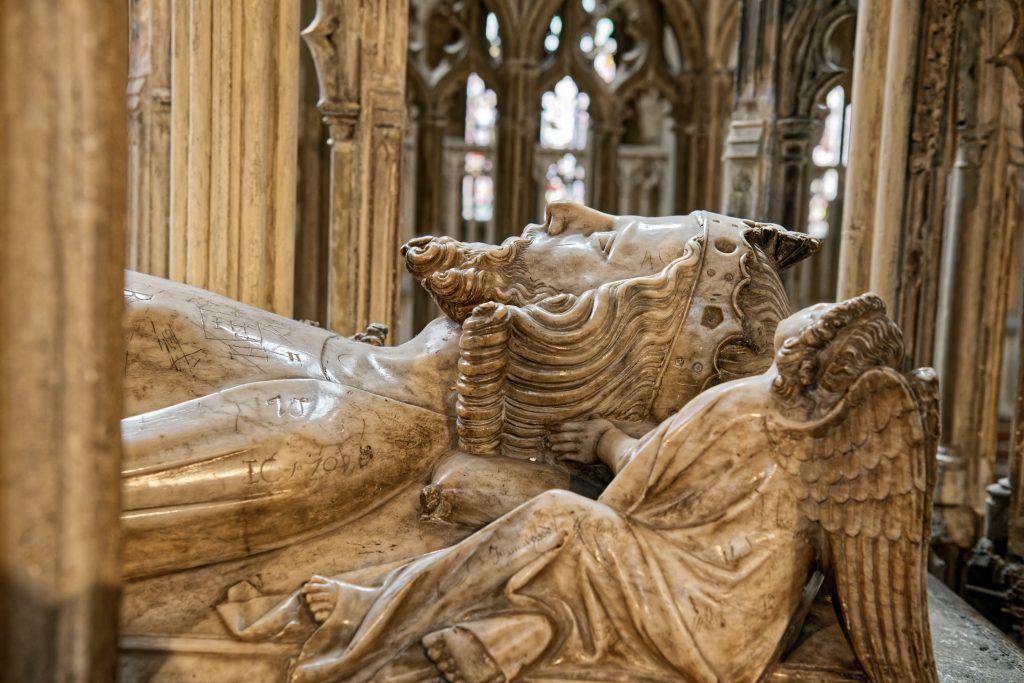
For contemporaries, it was far more concerning that Gaveston had been made regent at all. The act of leaving him in charge of the country granted him extraordinary powers and was the greatest show of favour the king could have possibly engaged in. By comparison, three hundred years later, when Elizabeth I was thought to be dying of smallpox, she named Robert Dudley as regent. The move outraged her courtiers and was widely interpreted to mean that the two were, if not lovers, then at least involved. Gaveston’s elevation didn’t quite provoke the same reaction, at least until Edward and Isabella returned to England for their coronation in February 1308.
While Gaveston was practically guaranteed a prominent role at the coronation, nobody expected him to dominate proceedings. He dressed in magnificent purple robes (a colour reserved for royalty), richly decorated. He carried the crown of St. Edward and sat beside Edward at the following banquet, the entire focus of the king’s attention. Even more insulting was that Isabella’s banners were nowhere to be seen among the decorations for the event. Instead, Edward’s heraldry was flanked by Gaveston’s coat of arms, something which caused deep offence to Isabella’s household and the gathered nobility.
Yet, it is not until Hugh Despenser the Younger arrived on the scene that contemporaries first began using language which might be interpreted as commenting on Edward’s sexuality. Such language is almost conspicuous by its absence in relation to Gaveston and the favourites who came before Despenser. Ironically, Edward opposed Despenser’s first promotion into the king’s household. Edward was close to the Despenser family except Hugh the Younger. When the nobles appointed him as Edward’s chamberlain, Edward was unhappy, reiterating that he didn’t even like Despenser. In a turnaround that would seem unrealistic to even the most diehard enemies-to-lovers fan, Edward’s attitude changed remarkably fast. By the end of the year, Despenser was openly gloating about how he could get the king to do whatever he commanded.
Where chroniclers had noted that Gaveston received unmatched favour, now they recorded that Despenser had “enchanted the king’s heart”, and “bewitched the king.” Despenser dominated the court and politics in a way that far outstripped anything Gaveston had managed. As well as securing himself riches, lands, titles, and position, Despenser also drove Queen Isabella from court, managing to keep Edward with him when he did so. One of the most significant signifiers of their relationship is found in the crown’s accounts, which reveal that Despenser’s household was merged with that of the king. Even the most devoted king and queen maintained separate households, but here we have Edward footing the bill for all of Despenser’s living expenses, from his clothes to his servants to the soap he used.
The word ‘sodomite’ began to be used to describe the king and Despenser, and while the term did not specifically refer to homosexual activities at the time, it at least had sexual connotations. One chronicler went as far as writing of the two, “the king and his husband.” Some historians have pointed out that this was surely not a literal description. Edward and Despenser were probably not living as spouses. But even as an ironic or satirical statement, we can clearly see that there was something about Edward’s relationship with Despenser that was far beyond the norm, even in a society where concepts of sexuality were far less defined.
The statement also brings us nicely to the double standard applied to historical figures when it comes to relationships. Edward brings it into stark contrast when compared with his wife, Isabella. Isabella would eventually overthrow Edward and Despenser with the help of her ally, Roger Mortimer. However, it is generally accepted by historians that Isabella and Mortimer were lovers, even though there is less contemporary evidence for the relationship than any of Edward’s with his male favourites. If Mortimer were described as Isabella’s husband, we can be almost certain there would be no qualifiers attached that it was to be taken satirically or ironically. We have no such statements that Mortimer “enchanted the queen’s heart” or that Isabella had “bewitched him” and yet an affair is not just assumed but accepted as a matter of fact, based largely on the assumptions that come from Isabella being a woman, and Mortimer a man.
As ever, the unsatisfactory conclusion is that we cannot conclude for certain whether Edward II was queer. If modern labels were to be applied at all then there is certainly more evidence that he was bisexual, a term that is so frequently erased from the historical narrative. We have no evidence from his own hands to give us any insight into his personal feelings for any of his relationships, male or female, and contemporaries were less concerned with what Edward did in the bedroom than they were with what he did in the throne room. Meanwhile, his wife shows us the incredible double standard applied to history. Queer relationships are subjected to all kinds of scrutiny, examination, and interpretation, whereas heterosexual pairings are accepted as standard.
We see this in Isabella and Edward, as we saw it in Part I with James I and George Villiers. Letters between James and George expressing their most intense desires to go to bed with each other (and I am not paraphrasing) are endlessly considered in light of the language of male friendships or differing social standards of affection. Meanwhile, James once wrote a poem to ‘my mistress, Lady Glammis,’ and an entire relationship is assumed without consideration of concepts like courtly romance. Ultimately, the question of queer history is less about who was queer, and more about why it’s a question in the first place. Historians who argue that a king might have been gay or a queen might have been queer are expected to present almost impossibly watertight cases before their arguments are taken seriously. Meanwhile, presumed heterosexual relationships are often accepted with far less scrutiny, hand-waved into the history books and considered “the norm” no matter how many men a king writes love letters to.
If you have enjoyed this post and would like to support my work, you can find me on Patreon. In the Patreon exclusive posts, I will be sharing the behind the scenes research, the bibliography, and the stories that didn’t make it into this post. Plus you can join me for some good old fashioned historical nitpicking. This will be my last post until the fall while I enjoy family time over summer! See you then!