Judging the sexuality of any historical figure is difficult. Making a determination on the sexuality of a royal figure, whose status and position depended on marriage and children, during a time that lacked the wide array of labels available to us in the present is even more challenging. When tradition demanded a king or queen marry and beget heirs, it’s easy to point to them and say they couldn’t have been queer because they were married with children, as if this was something they had any choice in.
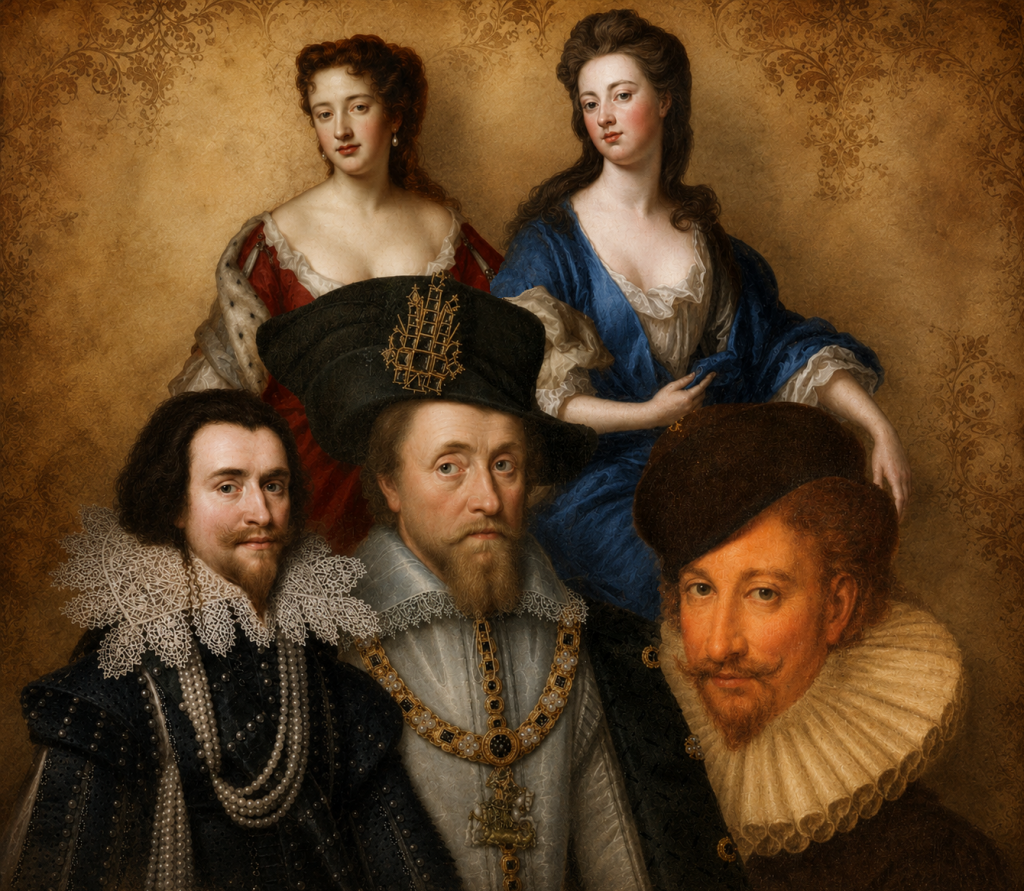
The first and last monarch of the Stuart dynasty, King James VI of Scotland and I of England, and Queen Anne, have prompted centuries of speculation regarding their sexuality. Their relationships with their respective favourites have prompted questions about sexuality and intimacy from contemporaries and historians alike, and when discussing the possibility of queer monarchs, their names are at the top of the list. Queen Anne’s relationships with Sarah Churchill, Duchess of Marlborough, and later, Abigail Masham, both of whom served in her household, has inspired discourse over female friendships in the 1700, and the type of romantic language used between women. Meanwhile, King James’ act of promoting his favourites into his household and their public displays of affection have been raising eyebrows for centuries blurring the lines between favouritism and intimacy.
Modern readers of history often want a nice clean answer to nice clean questions. Was Queen Anne a lesbian? Was King James gay? But seventeenth century concepts of sexuality were vastly different to the ideas and labels we have today. It isn’t my intention to make definitive judgements on whether a particular monarch was queer or not, instead, we’re going to consider why these particular monarchs have inspired these discussions.
If King James was affectionate with his favourites in a way that was normal for conventions of the time, then why do we speculate? If Queen Anne’s relationship with Sarah Churchill was entirely within the bounds of female friendship, then why was the term lesbian ever applied to her?
Unlike the monarchs we’ll discuss in Part II, we have a body of evidence to consider in relation to Anne and James. Literacy was common, not just at court, but among the emerging upper middle class. Political power had expanded beyond the royal hallways to include the British parliament, which in turn gave an entirely new group of people access to the monarch, and a new body of sources from which to draw from. And, of course, we have extensive correspondence from the monarchs themselves. With such a variety and range of sources to draw from, it’s a wonder that we have any questions at all. But even the most explicit of letters have been interpreted differently over the years.
Queen Anne and Sarah Churchill
Queen Anne’s most famous and defining relationship, regardless of the nature of that relationship, was with Sarah Churchill, Duchess of Marlborough. As queen, she hardly set history aflame and her enduring legacy is that she was boring, overweight, and lacked the intelligence to be queen. This image, incidentally, comes entirely from Sarah Churchill herself whom Anne was supposedly in love with until her affections transferred to Sarah’s cousin, Abigail Masham.
Sarah and Anne were childhood friends, at a time when there was no reason at all to suppose Anne might become Queen one day. Her Uncle, Charles II, had already had eight children out of wedlock by the time she was born, and so it was widely accepted that he and his wife would produce a legitimate heir. Charles would go on to have at least six more but none with his wife. The king’s heir was therefore his brother, Anne’s father, James II. It was also assumed that James would have a son, and even if he didn’t, Anne was the younger of his two daughters. Even if the succession fell to Anne’s family, her sister Mary would probably marry and have children.
For all these reasons, neither Anne or Mary expected to ascend the throne. They were raised as junior princesses of the junior Stuart line, although they received little education even for women of that station, and their companions were the daughters of leading courtiers. Among them was one Sarah Jennings, who would become one of Anne’s closest friends. They grew up together, and even by the standards of the time were unusually close. Anne would marry Prince George of Denmark, while Sarah would marry a soldier ten years her senior, John Churchill. We won’t go into the intricacies of the succession but suffice to say, James II was deposed, Mary and her husband did indeed assume the throne but died childless, and the unlikely junior Princess Anne became Queen Anne of Great Britain. Sarah Churchill, who had already been Anne’s First Lady of the Bedchamber, was now the closest attendant of the Queen, and given a host of other titled positions with an income to match.
Despite her many responsibilities, Sarah found every reason not to be at court. Anne allowed her long absences even though Sarah, by her own admission, rarely provided the queen with a reason. Sarah also refrained from showing the queen the deference one would expect and was indeed required at the time from an attendant to their mistress. Anne allowed her this too, and it was not for almost a decade before their relationship would ultimately collapse for more reasons than we can go into here. Sarah blamed her cousin, Abigail, who she claimed had not only replaced her in Anne’s affections but had manipulated her way into Anne’s bed.
Ultimately, it was her claim that Anne and Abigail were lovers that finally pushed the queen to have her leave court permanently.
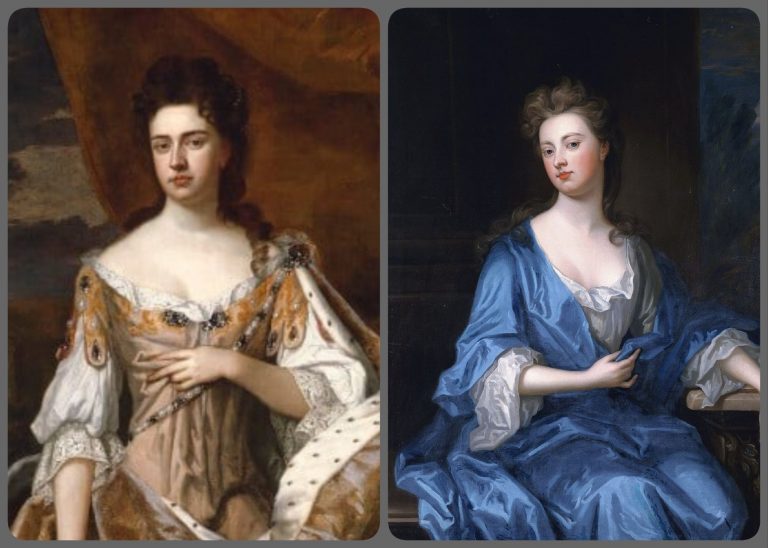
What specifically was it then, about Anne and Sarah’s relationship, that has prompted speculation? An all-female household was a must for a queen of the time, and the First Lady of the Bedchamber was therefore almost always a trusted confidante and friend of the sovereign. Intimacy was a given, but we do not apply romantic overtones to other queens and the ladies who occupied this position. Queen Elizabeth I, for example, gave the position to Kat Ashley, her closest friend and childhood governess. Sarah Churchill had been in Anne’s service long before she became queen, so it might seem only natural that she would maintain her position at her mistress’ side when she ascended the throne.
What sets Sarah apart as Anne’s favourite is not just that she held the single most important position within her household. It’s that she also held the others too. As First Lady of the Bedchamber, Sarah had the most personal access to the queen and determined the other members of the queen’s household. She was also Keeper of the Privy Purse, which gave her control and authority over the crown’s finances; Mistress of the Robes giving her control of the queen’s wardrobe and jewels, as well as the authority to appoint the queen’s personal servants; and Groom of the Stool which not only gave her unlimited and private access to Anne, but also authority over the queen’s appointments.
Previously, all of these positions had been divided between several courtiers (as they would be after Sarah was forced to resign), but for the years in which she occupied them, Sarah Churchill had complete authority over who attended the queen, who visited her, what she wore, and what she spent money on. It was unprecedented access and authority.
Official appointments were only one way in which Anne demonstrated her favour. Aside from these offices, Anne bestowed a myriad of grants and gifts upon Sarah. When Sarah remarked that she loved the royal lodge in Windsor Park, Anne made her Ranger of Windsor Park (the first and only time the position had been held by a woman), as the lodge was attached to that position. The existing occupant was evicted, and Sarah was further granted the lodge for three lifetimes to ensure she could not be removed in the same way. As was her way, Sarah did not thank Anne for this. Instead, she complained bitterly that the position did not come with an income, and so she had to furnish the lodge at her own expense. In the future, Anne would often cover the cost of Sarah’s redecorating and granted her whatever property and land she asked for.
Again, these expressions of favour don’t tell us for certain that Anne was gay and in love with her best friend, but they certainly demonstrate just how favoured Sarah was, and why even contemporaries were raising eyebrows at the two. Said eyebrows reached even the most powdered of hairlines when one considers that Sarah was openly disrespectful to the queen and was known for hardly showing up to her many jobs. Imagine their reaction had they found out Sarah was actually misusing funds from the Privy Purse for personal gain.
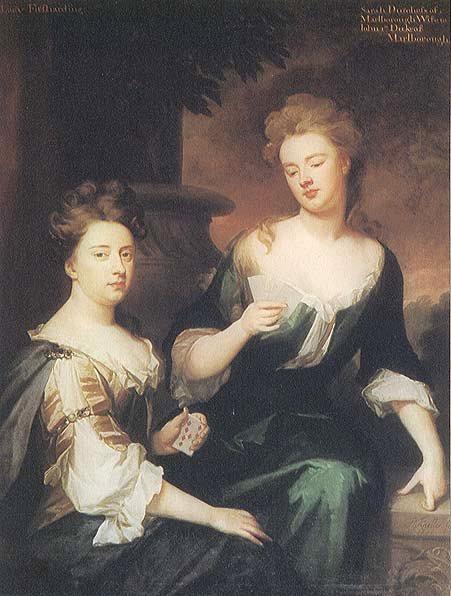
Having seen how Sarah became the most politically powerful woman at court, we can turn our attention to the personal. For it is here that we get much of our evidence that Sarah and Anne’s relationship might have been something beyond close friendship. Sarah kept meticulous records, which included her correspondence from Anne. She would later publish these letters in her memoirs, portraying herself as a virtuous and selfless confidante who did her best to redeem Anne’s many faults, or at least conceal them.
Anne’s letters are deeply emotional and laden with romantic language. It is tempting to see the relationship as entirely one sided where Anne showers unrequited or even unwanted affection upon Sarah, but that’s because we only have Anne’s correspondence to judge, a situation which Sarah engineered. She had Anne burn all her letters upon reading, something which Anne did and likely thought Sarah was doing the same. Instead, Sarah made meticulous copies of Anne’s letters and would later use them in threats of blackmail against the queen. Personally, I imagine Sarah’s letters contain just as much sentiment with probably a large dash of manipulation.
“If I writ whole volumes, I could never express how well I love you.”
“I had rather live in a cottage with you than reign empress of all the world without you.”
“Dear Mrs Freeman that I love more than words or actions can express.”
“Believe me, you’ll never find in all the search of love a heart like mine.”
“After having read and kissed your dear kind letter over & over, I burnt it much against my will and, I do assure
you, you need never be in pain about your leters, for I take such care of them tis not possible any accident can happen that they should be seen by anybody.”
“one kind word … would save me if I were gasping”
“banish all your fears for there is, nor never will be, any cause for them. Oh no, your poor unfortunate faithful Morley has a constant heart, loves you tenderly, passionately and sincerely & knows the world too well (if I were of a
ckle temper) ever to be charmed with anybody but your Dear Self…I hope I shall get a moment or two to be with my dear Mrs Freeman that I may have one dear embrace, which I long for more than I can express.’”
A selection of extracts from Anne’s letters to Sarah over a period of twenty years.
We can see in these extracts the depth of feeling Anne clearly had for Sarah. Historians have claimed that such language was common in female friendships, or that romantic language by modern standards did not necessarily mean it was romantic at the time. However, even by contemporary standards, Anne’s letters to Sarah were unusual. For a start, from the earliest days of their friendship, Anne insisted that they refer to each other as Mrs Morley and Mrs Freeman. That way, they could write to each other without regard for rank. Sarah could address her as an equal and was encouraged to be frank and open in her correspondence.
Contemporaries may not have considered the language as romantic as we do, but the informality alone would have been shocking. Sarah was often criticised for not showing due deference to the queen and her position, something which Anne actively encouraged in their personal life. That said, there is evidence to suggest that contemporaries were wary of the relationship from its beginning. Letters between Anne’s sister and father suggest they were actively trying to separate the two women, to no avail. Correspondence between James II’s courtiers show that there was concern for Anne’s language regarding Sarah, specifically her desire to “possess her completely” which had romantic connotations even then.
When Queen Mary and King William took the throne, they took even more interest in the relationship, knowing that Anne was next in line to the throne. Initially, they are noted to have remarked that they hoped Anne’s infatuation with Sarah would fade. On the contrary, it seemed to increase. When the monarchs had Sarah removed to the country, away from court, Anne defiantly followed her. When Mary visited Anne in person, demanding that Sarah be put aside, Anne was affronted. Even before she was queen, and granted Sarah unprecedented power, contemporaries remarked that there had been “none so favoured”.
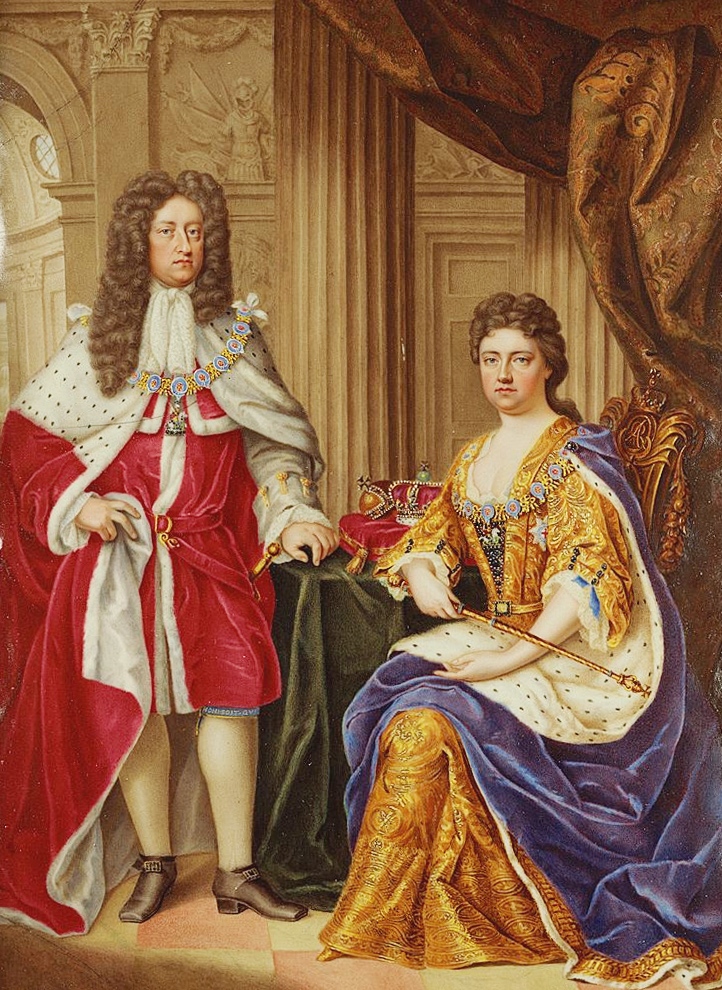
For me, what evidence we have shows that Anne was deeply in love with Sarah. Whether that translates to a sexual relationship is another matter. Modern historians often equate sex and love when actually the two are quite distinct. Anne’s letters and behaviour towards Sarah suggest a love that was romantic in nature. Again, we don’t have Sarah’s responses to judge her contribution to this but it’s unlikely that the two would have maintained the relationship that they did, for as long as they did, if Sarah wasn’t reciprocal, even if it was only on the surface. We do know that Sarah would become intensely jealous of Anne’s friendships, and would use her power to mitigate who could have access to the queen.
When Sarah discovered that the queen was close with another of her ladies, Abigail Masham, her reaction was more like a jealous lover than a concerned favourite.
Abigail owed her employment to Sarah’s intervention. Abigail joined the queen’s household in 1704 and was, by all accounts, the polar opposite of Sarah. She was kind and supportive to her mistress which earned Anne’s favour. Abigail never approached the heights of Sarah’s power, and we have no surviving personal correspondence that might illuminate the nature of her relationship with Anne. Nevertheless, Sarah accused Abigail of disloyalty and widely suggested that the queen had been seduced by her wicked cousin. She patronised the publication of several pamphlets and poems that accused Anne of lesbian acts with Abigail, an accusation that she made in person to a horrified Anne. Historians have put forward a number of reasons why Anne was unlikely to have been sexually active with either Sarah or Abigail; her religion, her chronic illness, her devotion to her husband, her nineteen pregnancies, and her abhorrence at the suggestion, but perhaps the most telling evidence is Sarah’s reaction to the suggestion.
When an anonymous pamphlet was produced claiming that Abigail had replaced Sarah as favourite and lover, Sarah was incensed. She went to great expense to discover the origin of the pamphlet, and to discredit what it said about her. This was not necessarily because she was trying to protect her reputation. Despite her obvious intelligence and wit, Sarah was apparently entirely blindsided by the accusation and railed against the idea. Loudly. Repeatedly. Naturally, she did not criticise the argument against Anne and Abigail. Nor did she apparently appreciate the irony that the author had simply taken Sarah’s own arguments and applied them to her.
My own view is that Anne was not sexually involved with Sarah (or Abigail for that matter) but that does nothing to take away from the deep and abiding love she clearly felt for the woman who dominated her reign, and the historical record since.
James and Esme... and Robert... and George
If Anne’s story demonstrates the difficulties of interpreting love between women in the historical record, James presents a different challenge altogether. Unlike Anne, whose relationships have often been explained away as unusually intense friendship, James left contemporaries in little doubt that his favourites occupied a central and extremely intimate place in his life. And yet! We still have many of the same problems. The evidence is different but issues of interpretation remain, as does the modern historian’s desire to either put a definitive label upon someone or deny that queer people have ever existed at all.
Where Anne was the last of the Stuart monarchs, James I of England, VI of Scotland was the first. This is not the first time I have written about James’ sexuality. You can read a more detailed account of his relationships here. Where Anne had one great love of her life, James had several. Many of whom were men, much to the chagrin of his court, and anyone who uses the King James Bible as an argument against homosexuality.
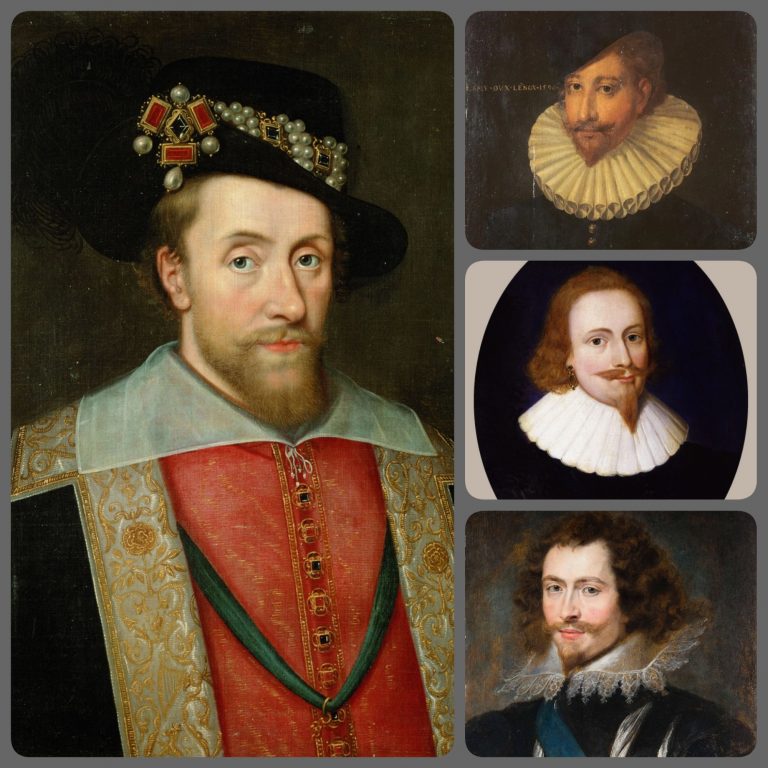
As a young man, James was praised for staying away from girls, and instead seeking the company of men. Enter: Esme Stuart. Esme was James’ cousin. At thirty-seven he was almost twenty five years older than the thirteen year-old James, but James was immediately enamoured. When discussing Anne and Sarah Churchill, some mitigation of language has to be used because we do not know the exact feelings of those involved. We do not have that issue with James. The young James showered Esme with titles and gifts, including jewels created from the Crown Jewels of France that James’ mother had received as the widowed Queen of France. He also lavished Esme with physical affection, sitting with him in public and frequently kissing him.
When James’ court protested Esme’s Catholic sympathies and their “carnal behaviour”, James replied that Esme had never attempted to convert him to Catholicism. Ultimately, the court prevailed and the two were forcibly separated. Esme was banished to France where he would remain for the rest of his short life. He suffered from a sudden illness and, knowing he would not recover, Esme commanded that his heart be embalmed and entrusted to James, making good on his many sign offs that his heart only ever belonged to the king.
James then married Anne of Denmark as was his duty. He referred quite specifically to his duty in regards to his marriage, claiming that, were it not for the needs of his country, he would have foregone marriage altogether. The two would have periods of great devotion and open hostility, but it does not seem that James had another lover until he and Anne had ceased their sexual relationship in 1607.
That same year, which may have been a coincidence, James met one Robert Carr. Carr was a minor gentleman who was injured in a tournament held to celebrate James’ accession to the English throne. James visited him while he was recovering as a gesture of goodwill. However, he kept visiting him and in within seven years, Carr had gone from a minor gentleman to the Earl of Somerset, holding every office that James could give to him. He was made a Privy Councillor, Lord Treasurer of Scotland, Lord Chamberlain, Keeper of the Privy Seal, and Secretary of State for England. When James described him as the man “whom he loved above all men living” it utterly alienated the royal family, including James’ sons.
Carr’s fall from grace was even more rapid than his rise. His fall coincided with the rise of James’ next favourite though the two events weren’t particularly connected. Carr was already losing favour when James met George Villiers. Villiers caught the king’s eye in 1614. Despite belonging to a relatively minor gentry family, Carr’s enemies recognised him as a potential replacement for the king’s favourite and engineered his arrival at court. The queen herself secured his position as a gentleman of the king’s bedchamber. James was already taken with him and, as with Esme and Carr before him, Villiers was catapulted into wealth and position. Five years after arriving in court, Villiers was made Duke of Buckingham, making him the only Duke in the country not born into the royal family. This time, James was the senior partner in the relationship, twenty-five years older than the twenty-one-year-old Villiers. Yet the court was still embarrassed by their repeated displays of affection, which continued until James’s death in 1625.
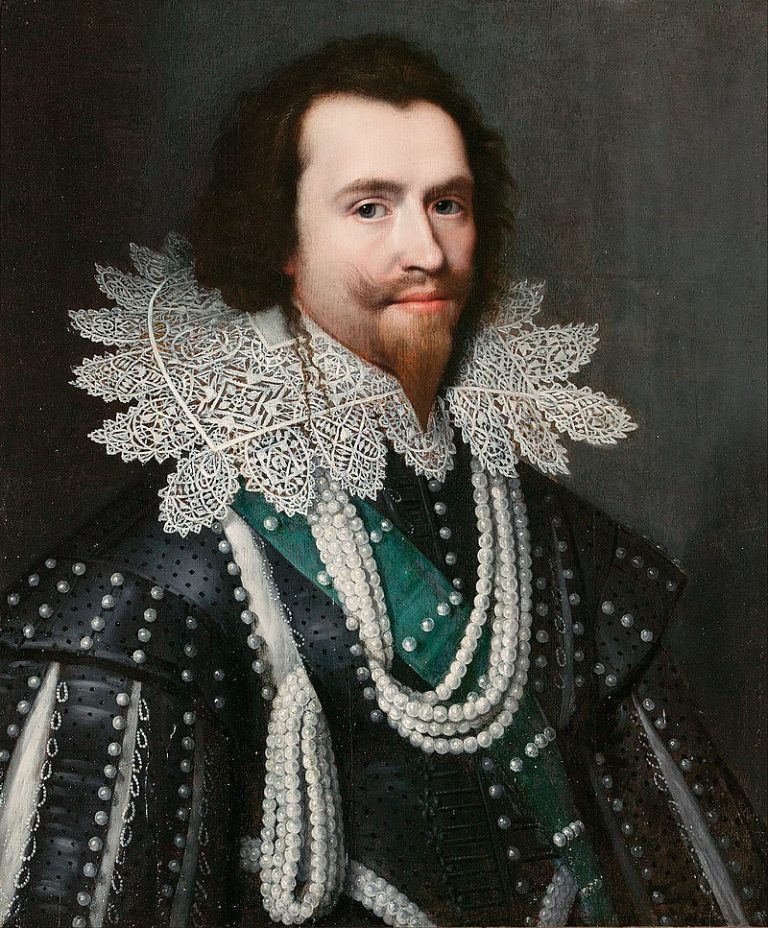
With Anne, we see her favourites gaining significance from positions that already granted intimate access to the queen. James’ favourites, by contrast, were given positions and influence because of their relationship with the king. It’s difficult to make the argument that Esme Stuart, Robert Carr, and George Villiers were examples of the typical kind of favouritism shown to courtiers when their rise was positively meteoric. There is no comparison to be made. Even if we take Queen Elizabeth I, who was widely accepted to be in love with Robert Dudley, and who was often described as the archetypal social climber, Dudley could only dream of reaching the heights of James’ favourites.
If we turn our attention to the personal from the political, James’ relationships and his feelings about them would seem to be obvious. If Anne’s letters are intimate, James’ correspondence can only be described as explicit.
“Thy dear dad sends thee his blessing this morning and also to his daughter. [Villiers’ wife] The Lord of Heaven send you a sweet and blithe wakening, all kind of comfort in your sanctified bed, and bless the fruits thereof that I may have sweet bedchamber boys to play me with, and this is my daily prayer, sweet heart.”
“I am now so miserable a coward, as I do nothing but weep and mourn; for I protest to God I rode this afternoon a great way in the park without speaking to anybody and the tears trickling down my cheeks, as now they do that I can scarcely see to write. But alas, what shall I do at our parting?”
“And yet I cannot content myself without sending you this present, praying God that I may have a joyful and comfortable meeting with you and that we may make at this Christmas a new marriage ever to be kept hereafter; for, God so love me, as I desire only to live in this world for your sake, and that I had rather live banished in any part of the earth with you than live a sorrowful widow’s life without you.“
Extracts from letters to George Villiers from King James.
For the sake of brevity, if we look at only the letters between James and Villiers, we see an emotionally intense and mutually affectionate relationship. James calls Villiers, Steenie (after Saint Steven who was described as having the face of an angel), sweetheart, sweet boy, and a host of other endearments. He refers to himself variously as Dad writing to his sweet child, a husband to his husband, a husband to his wife, a lover to his mistress and a master to his beloved dog. The first of these has led some historians to argue that James’ relationship with Villiers was primarily paternal, but it’s difficult to construe any non-romantic or sexual meaning from their other endearments. In Villiers’ responses we see the explicit meaning behind their letters.
“I naturally so love your person, and adore all your other parts, which are more than ever one man had”
“I care for match nor nothing, so I may once have you in my arms again. God grant it! God grant it! God grant it!”
“I cannot now think of giving thanks for friend, wife, or child; my thoughts are only bent on having my dear Dad and Master’s legs soon in my arms”
“I shall lose no time in hastening their conjunction in which I shall please him, her, you, and myself most of all, in thereby getting liberty to make the speedier haste to lay myself at your feet; for never none longed more to be in the arms of his mistress. “
“I entertained myself, your unworthy servant, with this dispute, whether you loved me now … better than at the time which I shall never forget at Farnham, where the bed’s head could not be found between the master and his dog.”
Extracts of letters from Villiers to James
It’s thought that Farnham might have been the location of their first sexual encounter, but Villiers was known to share a bed with the king wherever they stayed, as were Carr and Esme before them. Some historians have pointed out that this wasn’t altogether unusual; kings often shared a bed with their closest friends, as queens did their closest ladies. However, when we place bed-sharing alongside reports of the “carnal behaviour” displayed between the king and these men, it once again moves beyond what was considered typical at the time.
For James and Villiers, we also have unique physical evidence. The two met at Apethorpe Hall in 1614. The house was already one of James’ favourite places and in 1622 he paid for extensive refurbishing. Less than twenty years ago, in 2007, restoration work uncovered a secret passage specifically linking James’ chambers with Villiers. But by far, the clearest evidence of James’ relationships (if we were to discount that provided by his own hand) is the reactions of his contemporaries.
Courtiers wrote about James’ behaviour to each other and in their diaries. Visiting dignitaries wrote gossip to their friends. Ambassadors reported their observations to their masters. Together, these sources provide a wealth of testimony describing James’ behaviour towards his favourites as a-typical. As a young man, the court was embarrassed by the way a young James would kiss Esme Stuart. Later, they would bemoan Robert Carr’s incompetence and lament the king’s blindness to it. Finally, they would be embarrassed once more, this time by the way James would lay kisses upon Villiers’ neck or caress him in public. To be clear, only the king’s enemies made an issue of his ‘sodomy’ and relationships. To the court, it was unimportant (though uncomfortable) that the king was engaging in these behaviours so long as he actually governed the realm. Who he shared a bed with was immaterial unless it interfered with the State. It was for these reasons that Esme Stuart was removed, and later Robert Carr. Not because of the Stuart court’s views on homosexuality, but because they weren’t doing their jobs properly and in turn distracting the king from his.
The Problem of Interpretation
James and Anne lived at a time when literacy rates were rising and politics was becoming accessible to a new class of people beyond the traditional court elite. The Jacobean age saw the rise in diarists, and correspondence was not limited to the uppermost classes. In short, we have a wealth of sources to draw from, not just from the monarchs themselves, but from the wider world around them. So why, one would ask, is there even difficulty in asking the seemingly simple question “Was Anne/James gay?”
The issue lies in trying to place modern labels on historical figures. Anne and James would certainly not have identified as gay or even bisexual, not because those terms didn’t exist (they did) but because they weren’t particularly important at the time. It didn’t matter if the king wasn’t sexually attracted to his wife (and vice versa) so long as they were married and tried to secure the succession. Contemporaries were not looking at James and his favourites and wondering, “are they gay?” Instead they were worrying, “is he about to invent another title to give them?” I will say that contemporaries were a little more scandalised at the prospect of Anne having relations with her ladies, but that’s because lesbianism was a little more of an unknown quantity. The world of men found themselves confused by the idea that women might want to engage with each other in that way, so it was pushed to the fringes as something to be ignored where possible, dismissed as friendship when suggested, or disdained when undeniable.
We also have a lot to thank (and curse) the nineteenth century for. Specifically, when it comes to history. Historians from this period applied their moralistic values upon the times they were studying, which is why we suddenly get the idea that no monarch would ever engage in homosexuality because it is and always was a sin. This is an idea that has dogged historians well into the twentieth century. It was only during the 1980s that historians started to consider that actually, maybe James I’s language to George Villiers wasn’t just traditional and flowery. Maybe it really was as erotic as it seems.
Another issue, is that labels of sexuality are invariably tied up with sexual acts. If Anne was gay, she was having sex with Sarah Churchill. If James was gay, he was having sex with his favourites. But Anne herself was shocked at the idea of sex with a woman, and James is known to have noted sodomy as a particularly egregious crime. Incidentally, the terms sodomy and buggery have always meant the same thing but with different connotations. At various times, like say under James I, sodomy was not just the act of anal sex between men, but carried with it the association of abuse. At the time buggery was the term for what men did with men, but two hundred years later the term came to be connected with abuse while sodomy became the specific language of law.
Times change, language change, perceptions of sexuality change, but love does not. Ultimately, a far more interesting question than was a particular king or queen gay, is how did queer relationships play out on the largest stage in Britain?
In Part II, we’re going to consider the question of queer monarchs from a time where sources were not so available. If Anne and James leave behind letters, memoirs, and abundant documentation, the medieval monarchs who follow present a different challenge entirely. For Edward II, Richard I, and William II, historians must rely far more heavily on chronicles, rumours, and the testimony of often-hostile observers, with practically nothing at all from the men themselves.
In the meantime, if you’d like to learn more, check out the source material, ask me any questions, or just join me for some general historical nitpicking, you can find me on Patreon. If you’ve enjoyed this post, Patreon is the easiest way to show your support.