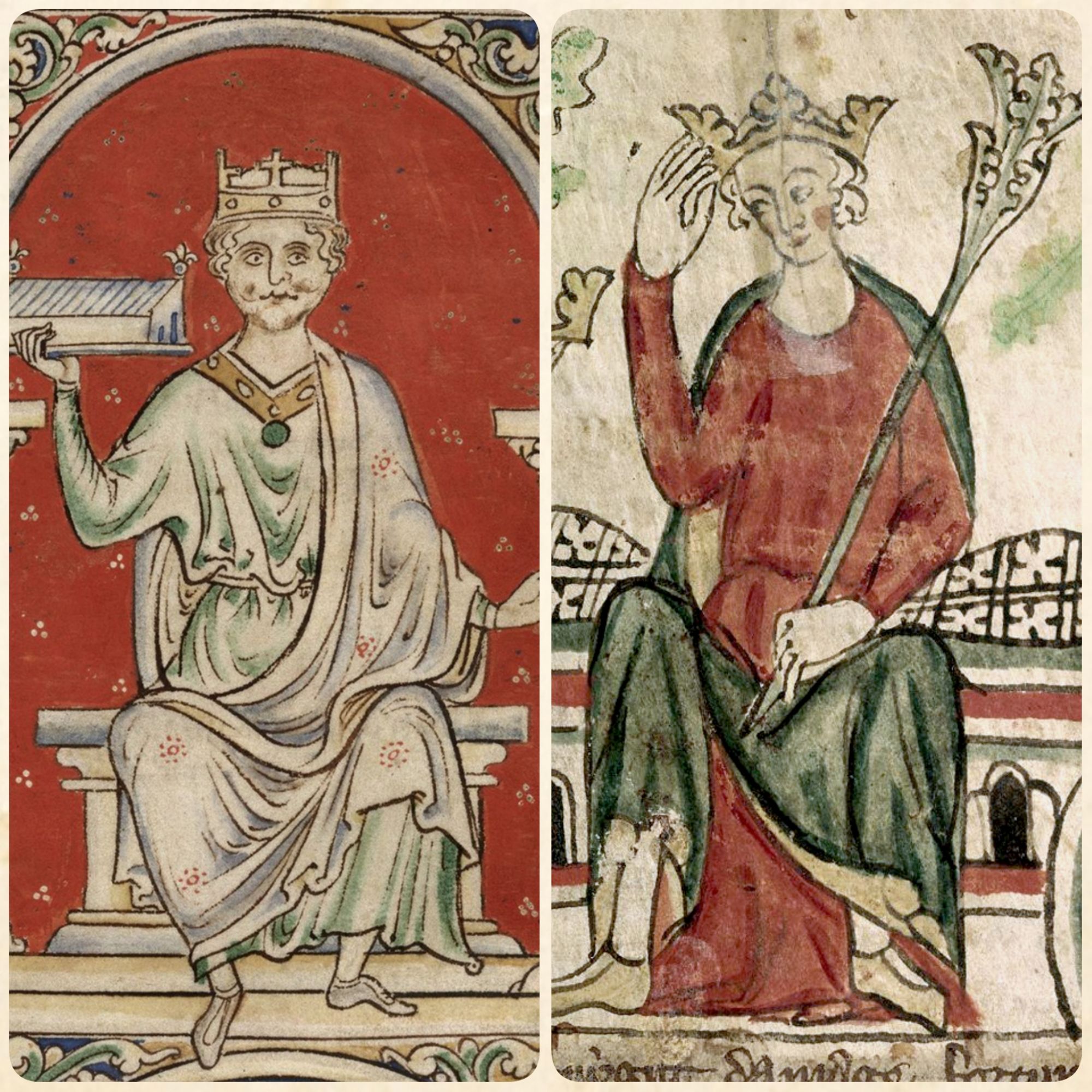
If you lived in Europe, June 2026 was hot. Temperature records across the continent were broken, especially in Western Europe, with France recording the highest highs at 44.3°C (111.7 °F). It’s thought that almost five and a half thousand people have died in heat related incidents, and there has been an incredible amount of discourse over how unprepared and unsuited European countries are to extreme heat. (FYI air conditioning is not common in Europe).
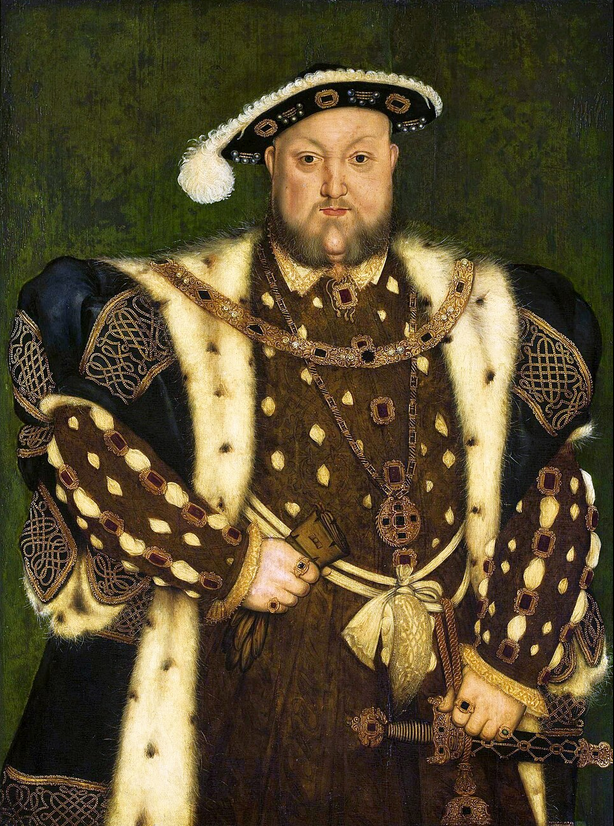
Looking at this portrait of Henry VIII, it’s impossible to imagine choosing to wear this many layers of what is clearly heavy and thick material. Yet this painting was completed in 1540, the same year a devastating heatwave struck Europe.
That’s not to say this is exactly what Henry was wearing in extreme temperatures, but it is indicative of his traditional wardrobe. If modern Europeans struggle in high temperatures with all the comfort of electric fans, cold water on demand, and a society that doesn’t balk (for the most part) at bare arms and bare legs, how did medieval Europeans survive the same?
It’s easy to imagine noblemen passing out under a dozen layers of wool and velvet, while peasants suffered heatstroke in the fields. But while they might not have access to the comfortable cooling methods of the modern day, the people of the medieval world did not necessarily suffer helplessly. Their relationship with their environment, climate, and weather was considerably different from ours. Daily routines, work, architecture, clothes, and food were shaped around the seasons and the anticipation of the weather. A far cry from the modern day, where life is expected to go on as normal and any disruption caused by weather is considered a failure of infrastructure. God bless capitalism.
In many ways, extreme heat presented greater danger to our medieval ancestors than it ever could to us today. A drought in medieval England could disrupt harvests and lead to devastating consequences. Today, the first casualty of an English drought is the common garden hosepipe. But in terms of everyday heat, or slightly hotter than average weather, Medieval Europe was in many ways better prepared than the rest of us, electric fans and all.
Heatwaves and the Medieval Climate
When we think of weather in the past, it’s easy to fall into a trap of assuming it to be uncomplicated. There’s sometimes an assumption that unusual or unpredictable weather is a uniquely modern experience caused by climate change, and people of the past lived in safe, predictable seasons. Winters were cold, spring was mild, summer was warm, and autumn was golden. Period dramas or historical films certainly encourage this idea, however accidentally, by using these simple ideas to convey the change of seasons on screen. Weather is part of the scenery, not a part of the plot, so the accuracies of the historical climate aren’t really a priority.
The reality was that weather was very much part of the plot. Medieval life was shaped around it but it was subject to dramatic changes. There’s a wealth of physical evidence to support this and an entire field for the study of the historical climate. Tree rings can show periods of growth and hardship, while pollen grains preserved in sediment indicate changes in agriculture and environment. There is an entire science devoted to the study of the historical climate and thankfully (for the non-science minded historian at least), the occasional writer saw fit to commit their observations about the weather to paper.
It is from these records, and analysing the physical evidence, that we know that the early middle ages experienced a relatively warm climate called ‘The Medieval Warm Period’. In the centuries that followed, the North Atlantic saw a long term period of cooling known as ‘The Little Ice Age’. Within both was the capacity for extreme weather events, and despite the name, there were occasions of extreme heat. The most dramatic of these heatwaves occurred in 1473 and 1540. There is evidence to suggest that the former was the most widespread and extreme period of weather Europe faced during that millennium. The heat, which afflicted much of Europe, including Ireland and Southern Scandinavia, lasted for fourteen months. The heatwave of 1540 is thought to have not been quite as extreme in that temperatures didn’t quite reach the highs of 1473, but a year of hot weather with little rain and warm winters led to devastating events across the continent.
Still, medieval society was well adapted to the demands of seasonal changes, in ways that might surprise a modern reader. The key word is ‘adapted’. Even without modern technology or scientific understanding, human beings have always adapted what they have got to a situation, which is exactly what we see when we look at how medieval Europe dealt with hot weather.
Cooling a House without Air Conditioning
The clearest example of medieval society adapting to the climate is in the architecture of the time. Before we had electricity or refrigeration, buildings themselves were built in such a way to regulate temperature. A northern European castle and a southern Spanish palace were built to respond to different environmental challenges, something we can clearly see in their design. In the north, we see buildings with thick, stone walls to help regulate temperature. In winter, they protected against the cold and damp, paired easily with soft furnishings to improve insulation. While the same stone walls also helped keep buildings cool in the summers. Windows could be shuttered against the sun, and cellars were practically guaranteed to be cooler space. It was in the Spanish Peninsula and Portugal (Iberia) that we see architecture coming into its own to work with nature.
When Muslim rule was established across much of Iberia from the eighth century, it brought architectural ideas shaped by centuries of development across the Mediterranean and Middle East. The same could be seen in areas of northern Italy, where the ports did much of their trade with the Middle East. Local practices, existing Roman architecture, and Islamic tradition combined in beautiful buildings that responded well to the warm climate. When the northern Christians drove the Islamic rulers from the south of Spain, they rejected the religion but retained the palaces.
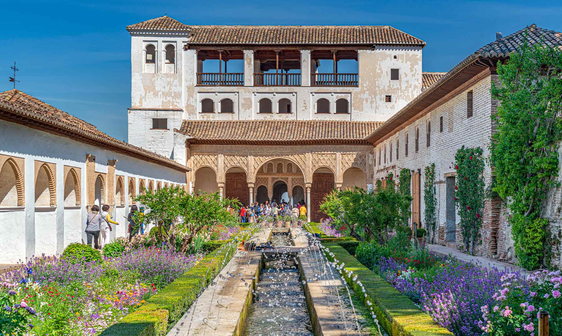
The Alhambra in modern day Granada, Spain, survives as the most complete (and beautiful) example of this kind of architecture. Small windows ensured that rooms couldn’t get too hot, while hallways and courtyards made use of arches to provide shade and allow airflow. Walls were whitewashed in order to reflect the sun, and courtyards often contained water features provided with clean water through irrigation. The result was buildings that could remain cool even during the hottest of summers. The Italian trading town of Amalfi also retains a number of buildings inspired by the Middle East and the Mediterranean. As goods flowed from these kinds of trading hubs, so did ideas of style and design. Across Europe features like courtyards, arches, and sheltered walkways were adapted in different ways; allowing cool air circulation in the summer, and shelter against even the wettest of British winters.
Clothes, Cooling, and Customs
As with architecture, the clothes of the middle ages reflected the differing needs of society. Those in warmer parts of Europe tended to sleep naked while those in the colder regions slept in their undergarments. The nobility of Greenland and Iceland favoured warm woollen coats while their French and Italian counterparts wore silk jackets. Clothes for anyone who wasn’t a noble were practical but fashion was still a consideration. People have always wanted to look good and even an ordinary labourer would choose colours and patterns over plain smocks wherever they could. There was, however, one convention that remained consistent across Europe regardless of culture, environment, status, or geography; show as little skin as possible.
The short shorts and crop tops of today would have been a scandal, and a person wearing nothing but underclothes was considered to be naked. That said, covering one’s body did not mean that people sweltered for the sake of modesty. Clothing functioned according to the seasons and, like today, materials were a major factor in keeping cool during the hot weather.
Garments made of cotton were relatively common in the Mediterranean and sometimes exported further north. However, for much of Europe, linen was the summer fabric of choice. It was used for underclothes worn next to the skin as a light fabric that soaked up sweat and oils, remaining cool against the skin. It could also be stiffened to provide dimension in clothes which provided an inexpensive way to add details in a fabric that didn’t hold colour as well as others like wool. In summer, functional lightweight fabrics trumped heavier fashionable offerings. Hats or hoods were also a common feature of medieval fashion, worn both inside and outside. In hot weather, labourers exchanged wool caps for wide brimmed straw hats, which kept the sun off their faces without retaining heat.
The nobility and upper classes of society faced a rather different problem. While not every day would have seen them donned in outfits like the one Henry VIII wears above, clothes were an outward demonstration of wealth. Layers of loose linen or thin fabrics encouraged airflow but there’s no question that the higher classes would sometimes choose status over comfort, donning half a dozen layers of velvet, taffeta, and damask even in warmer weather, to demonstrate their wealth. In that regard, it was cooler (literally) to be a peasant.
Daily Living
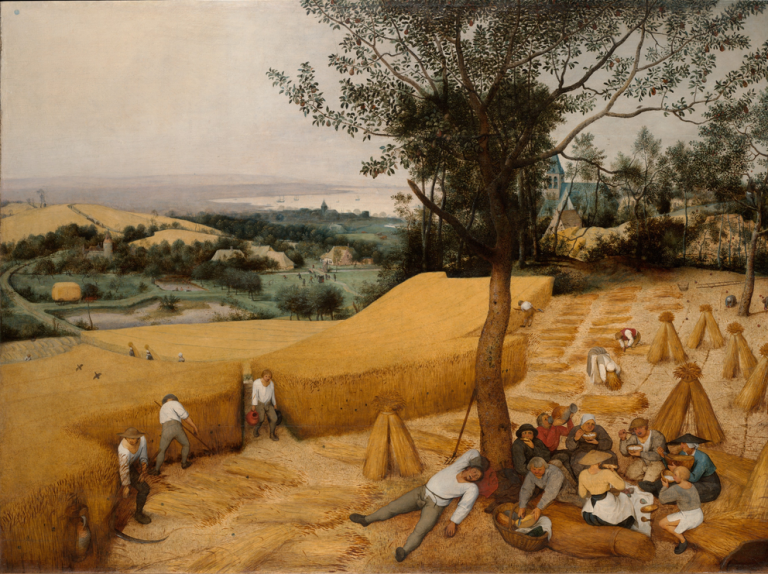
When we think of work in the middle ages, we think of farm workers toiling in the fields come rain or shine. For much of European history, the vast majority of workers worked in agriculture. Society depended on the fruits of the harvest for food, not only to feed people but also livestock. Some foodstuffs could be stored to defend against times of scarcity, and of course, excess could be traded. But, once again, this doesn’t mean that workers were out in the fields, during the hottest times of the year, labouring under a burning sun. Unlike today, where standard workdays generally follow the same hours on the same days regardless of any other considerations, the medieval workday was structured to work with the changing of the seasons.
It was unavoidable that much of the harvest would be undertaken during the summer months, when crops were fully grown. But the day’s work would be scheduled around the weather. People would rise early, when the air was still cool. They would avoid working during the hottest parts of the day, something they wouldn’t need a modern thermometer to discern, and resume in the cooler afternoon. Wet weather could ruin a harvest so it was important that during the summer months, crops were harvested efficiently, but people of the middle ages were well aware of the dangers of working in prolonged heat, even if they didn’t have modern medical knowledge or terminology.
Diet also played a part in keeping people cool. The agricultural developments of medieval Iberia under Muslim rule expanded the cultivation of “exotic” such as peaches, pomegranates, and citrus fruits. At the time, physicians believed that to remain healthy the four “humours” must be kept in balance. During hot weather, foods that were cold and wet (with regards to their humoral properties rather than their physical temperature) were eaten in order to keep the body in balance. These included said peaches and pomegranates, and citrus fruits, as well as lettuce greens, and fish. Wine was often watered down during warmer seasons and water itself could be drunk. There is a common misconception that clean water was unavailable to people of the past, but water flavoured with herbs and/or spices was common though small ale remained a popular drink of choice among the labourers even during the warm harvest season.
Adaptation vs Extremes
The people of the middle ages might have been better equipped to deal with the occasional heatwave and warm summers, but they were less able to withstand the devastating effects of prolonged hot weather. Such times proved just how precariously balanced medieval society could be. The megadroughts of 1473 and 1540 illustrate this point perfectly. Prolonged heat could have a multitude of consequences, but in the medieval world, various chains of events could lead to the same result: mass casualties.
The years 1473 and 1540 were characterised not just by hot summers, but an unseasonable lack of rain, and warm winters. For 1540, we actually have written records from a number of sources across Europe that record the specifics of the weather. A vineyard owner in the south of France, a scholar in Krakow, and others reveal that there were a total of four days of light rain in April, six in June, three in July, four in September, and three in October. With only an average grand total of twenty one days of rain (and specifically light rain), it’s no wonder that devastation followed.
In both years, the harvest that would usually be gathered in summer was ready in the early spring. This might sound like a boon (surely nobody would protest food being available early), but when society is built around the work of a year, any disruption to that can be catastrophic.
In Iceland, the hot temperatures caused the grass crop to fail. Without the grass harvest, there was no food for the animals over winter, which led to famine, which led to death. In rural Italy, the failure of the crops again led to famine. People moved into the cities for relief. The higher population density resulted in greater poverty which created the conditions for fatal epidemics. In areas where famine did not lead to starvation, the higher levels of malnutrition contributed to weakened immune systems which again led to fatal epidemics.
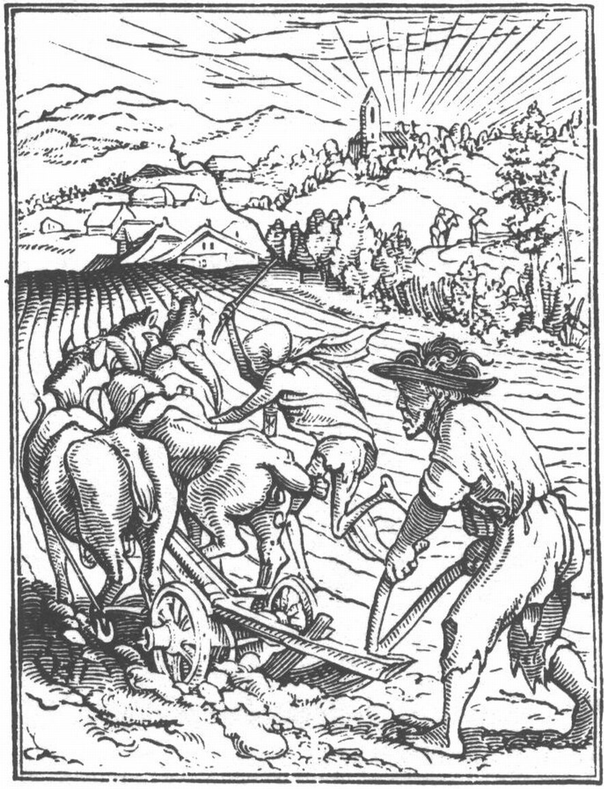
And then came the locusts.
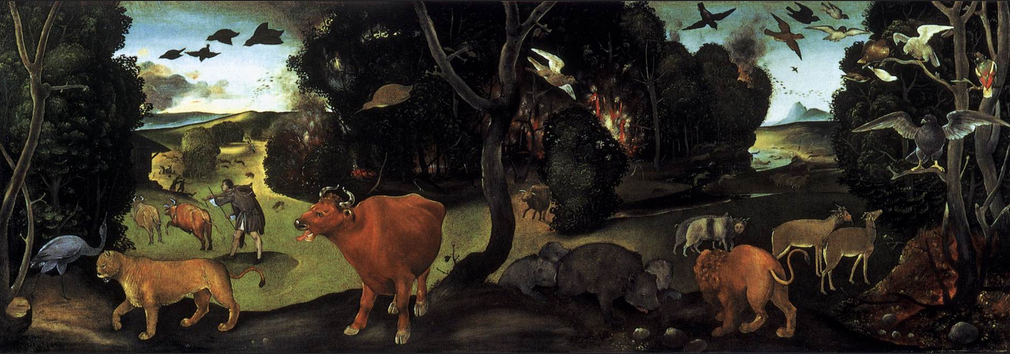
Attracted by the warm and dry conditions, large swarms of migrating locusts descended upon areas of western Europe. The swarms devastated what summer crops there were and laid their eggs in the fields. A cold winter would have killed them off, but a mild winter ensured their survival. In the years immediately after 1473 and 1540, when weather patterns were starting to return to a more bearable norm, the eggs hatched and the next wave of locusts descended. Between the famines, droughts, plagues, wildfires, crop failures, heat, and swarms of locusts, it is no surprise at all to learn that the people of the middle ages felt that they were experiencing, what they believed to be, the very worst of God’s judgement.
Plagues of almost biblical proportions aside, people of the middle ages were less able to withstand the large-scale devastation caused by excessive heat whereas in modern days, supply chains provide protections they could not have dreamed of. That said, they lived their lives in such a way that they could adapt to the weather in ways our relatively rigid modern routines cannot. We might have access to electric fans but many of us find ourselves sitting within glass buildings from 9-5 (and to return to an earlier point of discourse, often without air conditioning). In many ways, our ancestors had the right idea. They chose to work around and with the weather, rather than against it, though I’d wager most of us would choose a tower fan over linen underclothes and watered wine. Ultimately, we deal with oppressive heatwaves in much the same way as those in the middle ages; with a great deal of complaining and longing for rain.
If you’ve enjoyed this post and would like to support my work, the easiest way to do so is through Patreon. This is where I will be posting behind the scenes research, bibliography, and spotlighting sources that contributed to this article. Paid subscribers can also suggest topics that they want to see dissected in future posts.