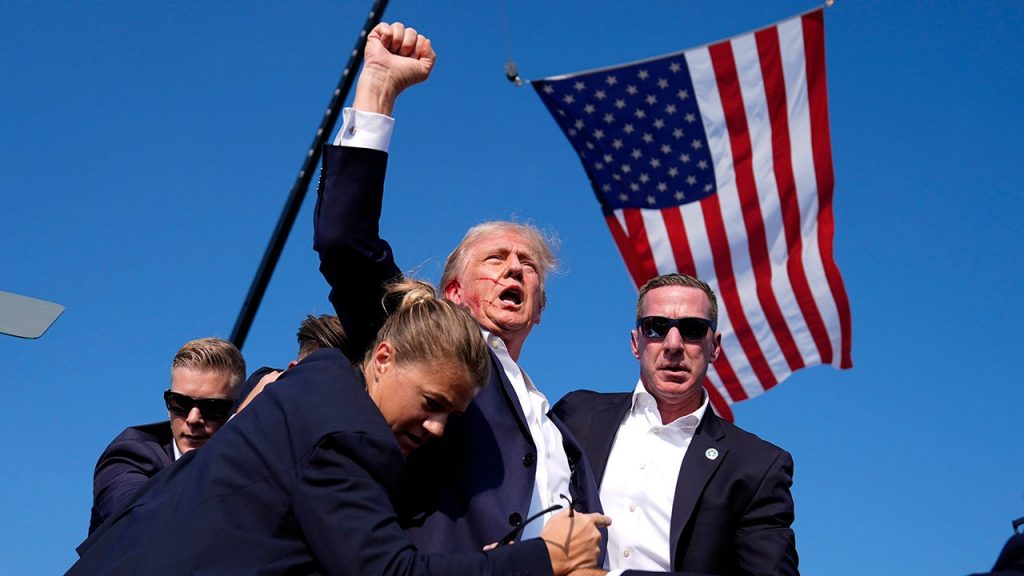
Since Donald Trump announced his intention to run for the Presidency of America, he has apparently faced multiple security incidents and threats to his life. These range from plots that were foiled before they could be enacted, to the infamous shooting during a rally at Butler, Pennsylvania. Most recently (at time of writing) was on April 25, 2026 when an armed suspect stormed security at the White House Correspondents’ Dinner, allegedly in an attempt to assassinate multiple members of the Trump administration, including the president himself.
There has been speculation that these attempts were fabricated, especially the most recent one which occurred at an event that Donald Trump has famously refused to attend annually. Some have said it’s singularly unfortunate that the one time he did attend, it was cut short by a gunman. The gunman, who was not killed at the scene, was arrested, taken into custody, and Trump immediately attracted criticism for using the event as a reason to push through his divisive plans for a White House ballroom.
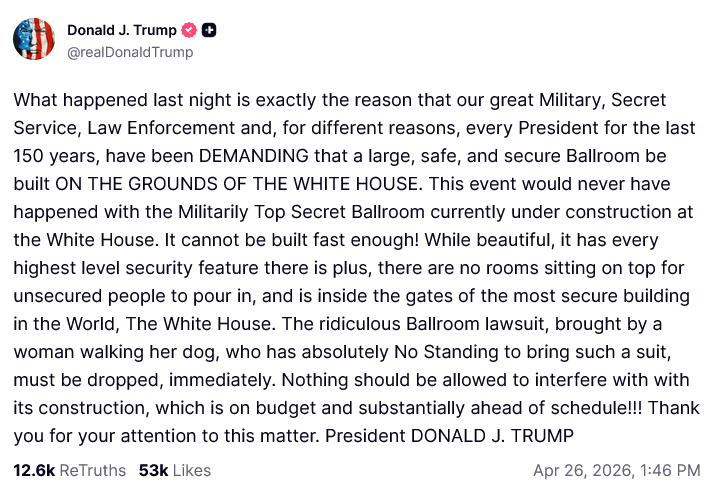
Something else Trump does, and has done, in the wake of the alleged attempts on his life is set himself up as a populist figure, pointing to the attempts as a means of silencing him thus showing how correct his political position is.
Over the past 8 years, those who want to stop us from achieving this future have slandered me, impeached me, indicted me, tried to throw me off the ballot, and even tried to kill me but I have never stopped fighting for you.
Donald Trump 2024
There is nothing new under the sun, and Trump would not be the first person in history, not even the first in recent history, to utilise threats to advance an agenda or increase personal popularity.
On an individual level, the most obvious example is Jim Jones, the cult leader of the ‘Peoples Temple’, who compelled over nine hundred people to commit suicide at his compound ‘Jonestown’. Survivors of the Jonestown Massacre, and people who had been in contact with Jones before he took his followers into seclusion, spoke of how he claimed to have been the victim of multiple assassination attempts. Initially, he used these attempts as a way to cement the rightness of his cause. He claimed that the American government, amongst others, were trying to suppress him and were not only prepared to kill him to achieve that end but had already made several attempts to do so. As well as garnering sympathy from his followers, it also allowed him to expand on the perceived threats to the cult itself. Using these attempts as justification, Jones moved the cult to a remote commune in Guyana.
Later, Jones continued to make claims that he had been targeted by assassins and is said to have staged further attempts on his life to demonstrate to his followers how the powers-that-be wanted him gone. Jones took it further by holding ‘White Nights’ where he simulated sieges on the compound by “government agents”. His own security was sent out into the surrounding jungle to fire upon the compound, making it seem like a real attack. Jones was able to use this to convince his already susceptible followers that his teachings, and their way of life, was so right and correct as to threaten the status quo.
The idea of using opposition, real or manufactured, to prove the righteousness and legitimacy of a cause is, unsurprisingly, not limited to cults. It’s a common tactic in authoritarian and fascist governments.
In the early 1950s, the leader of Soviet Russia, Josef Stalin, would use a similar narrative with ‘The Doctor’s Plot’. Here, a group of doctors (many of whom were Jewish) were accused of plotting to assassinate leading members of the government. Where they couldn’t outright kill their targets, they were supposedly conspiring to use their expertise to shorten their lifespan. Some years earlier, two leading Soviet ministers had died (at separate times) of heart failure. Those events were then ascribed to the doctor’s intentional and fatal misdiagnoses. The doctor in question was taken in for “questioning” and asked, under torture, about a larger conspiracy. Unfortunately for the Soviets pushing the agenda, he died as a result of the interrogations before he could implicate anyone. Nevertheless, the following year, almost forty doctors were arrested, detained, tortured, and/or questioned.
Stalin personally encouraged the investigators to obtain confessions, and he used the plot as evidence that he was personally under attack by conspirators who wished to undermine the government, a narrative he instructed the press to cover widely. By demonising an entire profession of people whom the average person trusted, he fostered reliance on the state and encouraged paranoia in an already divisive climate.
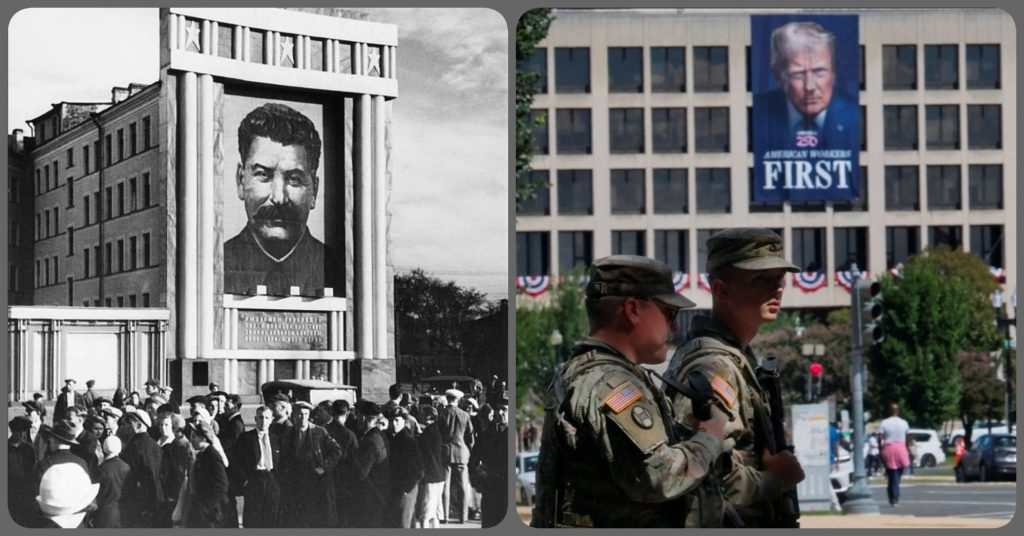
Like Jim Jones, Stalin used the fear of political enemies to justify his own position, and manufactured events such as the Doctor’s Plot as an excuse to further restrict civil liberties. We don’t know how far Stalin would have taken it as he died before any wider actions could be taken. The government that followed him dismissed all charges and exonerated the doctors who had been implicated.
Again, Stalin’s actions and behaviour was hardly new. Within the previous decade, Adolf Hitler had been using threats against the government as an institution to justify Germany becoming a fascist state. We do not know definitively whether the Nazis knew that a Communist was planning to set fire to the Reichstag building and let it happen, or whether they set fire to the Reichstag themselves and blamed a convenient scapegoat. Either way, the building in which the German Parliament sat burned and, less than twenty-four hours later, Hitler had used the event to suspend a number of civil liberties. These included freedom of press, freedom of expression, freedom of association, and the right to privacy in communications. He also ordered the arrests of his political enemies en masse as well as the incarceration of thousands of people who would have voted against him in the next election. Manufactured events like this don’t always ‘target’ a specific person but can be used to bolster an entire regime.
The people can always be brought to the bidding of the leaders. That is easy. All you have to do is tell them they are being attacked and denounce the pacifists for lack of patriotism and exposing the country to danger. It works the same way in any country.
Hermann Goering 1946
The British government has not been exempt from making use of such ploys either. In 1794, under the leadership of William Pitt the Younger, charges of plotting to kill the king were brought against three leading members of the London Corresponding Society. The London Corresponding Society had been a thorn in the government’s side for some years, with membership drawn from all walks of life but significantly the working middle class, whose aims promoted political equality for all men, not just the titled or rich. The government initially tried to smear the society by casting them as agitators and Republicans. They even invested in a pamphlet published across the country, denouncing the society as wanting to remove all distinctions of rank and property. Something which would surely hit the common working man as hard as any titled noble
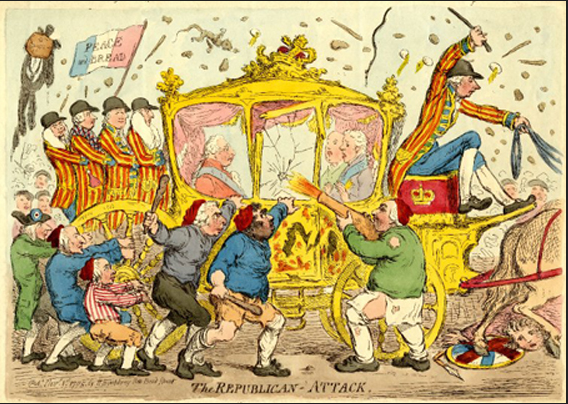
When the Society didn’t founder under the weight of the government’s criticisms, the government resorted to the tactics we have already discussed to cast them as dissidents. Unfortunately for William Pitt, he and his government, which were already trying to protect British sensibilities from the evils of the French revolution and the resulting wave of socialism that followed, were already restricting civil liberties. While they weren’t completely unpopular, opposition to their measures could easily be spun in a sympathetic light. So, instead of manufacturing a plot against themselves or the institution of government, they chose for their supposed target King George III who, at the time, was at the absolute height of his personal popularity. Given how universally loved he was across the country, anyone who attacked him could be easily castigated.
The government came up with ‘The Popgun Plot’ in which the King was going to be killed by a marksman with a high-powered air dart. Also the attack may have been foiled before it could take place, or it was an event that had actually occurred but the instigators caught. The government was inconsistent with their details and it didn’t take long for the trial of those arrested to collapse. The supposed assassins were acquitted though they remained imprisoned for another year.
In October the following year, while the King was en route to open Parliament, he was met with hungry protestors who cried out for bread, suffrage, and there may have been some republicans among them who wanted to remove the monarchy altogether. When the window of the King’s carriage was broken, the government descended with their all new Popgun plot. They claimed that a marksman had shot at the King with a high-powered air dart, though this time it was said to have been poisoned, and the three initial “plotters” were arrested again. Once again, the trial against them completely collapsed when the state’s only witness disappeared. One of their number went on to publish their experiences in a book. The book was deemed seditious material and the author sentenced to two years hard labour in prison. The government never really succeeded in discrediting the London Corresponding Society with their invented plot. If anything, they only succeeded in making the group more radical, leading to some of their members devising an actual assassination plot against the King. The government discovered it early on however, and allowed it to continue until they gathered enough evidence to condemn the instigator. Ultimately, he was executed for his crimes despite a lack of evidence, but once again prosecutors failed to connect the actions of a radical few to the larger Society. Unfortunately, the Society failed to weather this latest storm and the government had successfully suppressed them by 1805.
For more topical discussions or historical fun times, or if you’d like to support my work, you can find me on Patreon. This month we’re celebrating Pride with a look at some queer people in history. We have, after all, always been here.