It’s been a busy September for the British royal family. The King and Queen opened the Bayeux Tapestry exhibition at the British Museum. He then went on to host a summit regarding the development of artificial intelligence, while William and Catherine launched a suicide-prevention in sports initiative, before William went to Norway for King Harald’s funeral. There have, of course, been the usual round of dedications, plaque-unveilings, and ribbon-cuttings, and, as ever, Princess Anne’s calendar is putting them all to shame. Just a few days ago, when I sat down to write this edition of Topical Tuesday, the royal news dominating the headlines was the return of Prince Harry, Duke of Sussex and his family to England. Since then, even that has been overshadowed by Earl Spencer’s attempt to gaslight a nation into remembering him as the world’s best brother*. But, a peripheral aristocrat’s attempts to get on the Christmas bestseller list aside, Prince Harry’s return to the land of his birth and titles still raises some interesting questions, so I’m still going to write about that.
*I don’t actually like the Royal Family as an institution, and wouldn’t usually comment on the personal and complicated relationships between siblings. But when you publish a book filled with salacious claims presenting no more evidence than “trust me, bro,” you rather invite comment. Especially from those old enough to remember that you hardly moved mountains to accommodate your sister in life. (Me. I remember.)
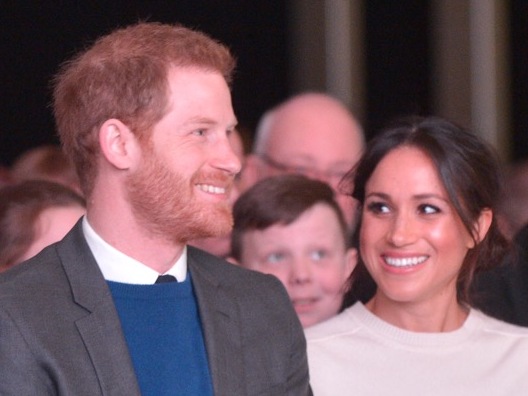
Earlier this month, Prince Harry, his wife Meghan, and their two children, Archie and Lilibet, returned to England. The Sussexes had been living in California since they stepped down as working royals in 2020. This decision attracted global media attention, as has seemingly every decision they have made since, but their return took the country and the royal family by surprise. Within days of their return, the King issued a letter to a number of parties, including Harry’s own team reiterating that the couple are not working royals and any engagements they undertake are in the capacity of private citizens. The letter apparently took the Sussexes by surprise, which has only fuelled the consistent media frenzy around the lack of relationship between the royal family and Prince Harry.
Prince Harry and Meghan are not the first royals to step away from the family. In the 1990s, a spate of royal divorces forced the ancient monarchy to confront a modern problem. The wives of two princes had ended their marriages, one of whom was married to the Prince of Wales, heir to the throne, and more importantly, heir to the headship of the Church of England which at least pretended to condemn divorce. In 1996, Letters Patent established that a woman who had acquired the style of Her Royal Highness through marriage would lose it upon divorce. The two women it immediately affected, Sarah Ferguson and Diana Spencer, were allowed to retain a version of the titles they had held by marriage. Sarah became Sarah, Duchess of York, while Diana became Diana, Princess of Wales. Grammatically, the fact that Diana went from The Princess of Wales to Princess of Wales might not look like much, but it allowed her to retain the title with which the public associated her with, without implying she was still the wife of The Prince of Wales.
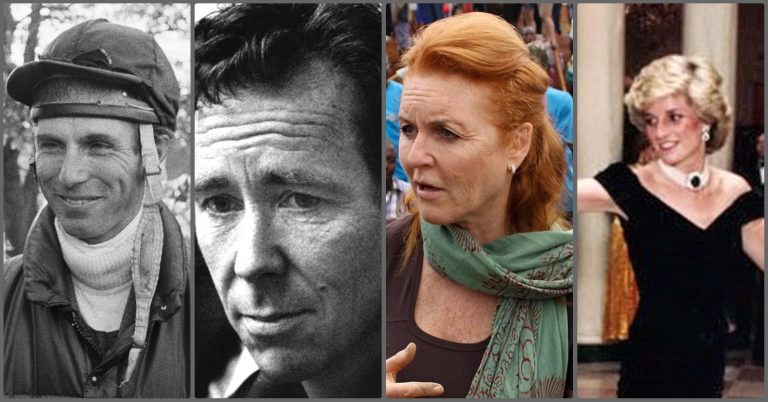
Incidentally, Princess Anne and her husband, Mark Phillips, had divorced four years earlier, in 1992, but no such linguistic diplomacy was needed for him (or for Antony Armstrong-Jones who had divorced Princess Margaret in 1978) because a man marrying a princess did not (and does not) immediately acquire his wife’s title and styles in the way a woman marrying a prince traditionally acquired that of her husband. For Mark Phillips, no such removal of royalty was required, and while he has continued to be a significant name in the equestrian community, he is far from a public figure. Sarah and Diana did not manage to separate themselves from the public eye so successfully. A great deal of this can be attributed to the way in which the media treats women in the public sphere. Phillips has lived a relatively quiet life and his subsequent infidelities have not received the enduring attention of say, the photographs of Sarah on a beach with her lover complete with the infamous toe-sucking incident, or literally any story related to Diana.
Media bias aside, despite their divorces, Sarah and Diana remained deeply connected to the royal family. In Diana’s case, we don’t know what kind of identity she might have carved out beyond the royal family. Her immense popularity did not diminish upon her divorce, in some ways it actually increased, and she remained the Princess of Wales if not the Princess of Wales. As mother of the future king, she would never have been separate from the royal family, but her premature death in 1997, just a year after her divorce meant that she never got to fully realise her identity beyond the royal family.
Sarah, on the other hand, never really removed herself from the family into which she married, even after her divorce. So close were her and her former husband, that there has been repeated speculation in the press that they might remarry, and Sarah herself has suggested in interviews that the divorce was a means to allow her a career, though she has also claimed that his naval career proved too demanding on the couple. Regardless, she continued to live with or near her former husband, continued to socialise with him, and the two remained prominent friends of Jeffrey Epstein. After her divorce, she continued to patronise various charities, and built a career as a writer and media personality, but these opportunities stemmed from her connection with the royal family. Some of her television projects, for example, focused on her position as the mother of two princesses.
To be a member of the royal family is to be a public figure, and, naturally, the closer one is to the crown, the more public the figure. Sarah and Diana had little public identity before their marriages. They became public because of their proximity to the crown and that association in the public eye did not end even after the relationship was legally severed. There is no easy roadmap for how a former royal lives quietly, in part because it is something so rarely done. How on earth then do we even begin to extricate Prince Harry from his royal identity?
The term “working royal” did not originate with Harry and Meghan but upon their 2020 announcement, it suddenly saw common usage, and would continue to be used when the Andrew formerly known as Prince also stepped down. Previously, it was a practical distinction for junior members of the royal family who did not represent the monarchy at engagements. We’re talking about people like Zara Tindall, the daughter of Princess Anne, and niece of King Charles. She is a member of the royal family by birth, and she works, but she is not considered a working royal because her career is her own and she does not appear in place of the monarch to cut ribbons or present trophies. There are, in fact, a number of members of the royal family who fly under the radar and rarely make the news beyond their weddings, graduations, birthday parties, etc. Even then, these events attract media attention simply because it becomes a gathering point for other, more famous, royals.
Harry is one of those more famous royals, and he has been since birth. While history presents us with a couple of distant princesses who chose to relinquish their royal styling upon marriage, there really is only one comparable person in history who chose to step away from his royal duties. It’s the big one of course; the abdication of Edward VIII.
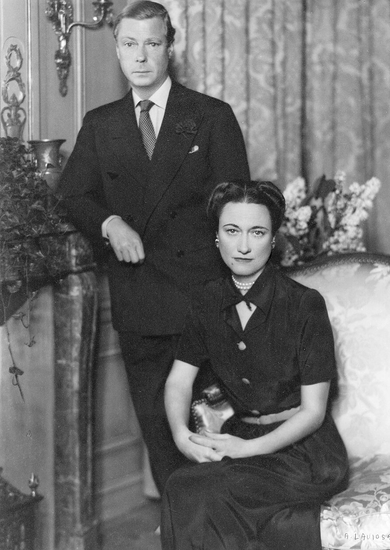
In 1936, Harry’s grand-uncle Edward VIII, King of the United Kingdom and the British Dominions, and the Emperor of India stepped down from the throne, relinquishing his crown to his brother. Faced with significant opposition to his proposed marriage to American divorcee, Wallis Simpson, the king abdicated. He was created Duke of Windsor the following year, and faced a decision quite similar to Prince Harry; what now?
Windsor and his soon-to-be-wife left Britain for France, assuming that they would return after a few years when the attention had died down. This was not to be the case, and, they found that avenue blocked to them when the new King George VI refused to allow Windsor to return to the country without express permission from the monarch. After the Second World War, the couple returned to France where they simply…remained. His relationship with his family remained strained, to say the least, for the rest of his life. With the exception of his wartime posting as Governor of the Bahamas, a role which, arguably, he was given to keep out of trouble rather than any endorsement of his leadership and diplomatic skills, he was unable to find any kind of job or role within British society. In fact, he was barely allowed back into British society. He wrote his memoirs and contributed to various newspaper and magazine columns. And… that’s it. His life after the abdication, which spanned almost forty years, doesn’t even make up a quarter of his official biography. There is just not enough to say about these thirty-six years, even though they made up almost half of his life.
Initially, Prince Harry’s withdrawal from royal life was on significantly better terms than the Duke of Windsor. But then, Harry’s role had never been truly defined. As the younger son he was never going to be king, though as the son of, and one day brother of and uncle of, the king, he would have always been a central figure in royal life. Stepping down from the position, however, has been easier than stepping away from the identity.
He, and his wife, can stop being working royals, but he cannot stop being Prince Harry. Regardless of what job he does, he will always be the son of a king. He is fifth in the line of succession, followed by his two children. After a period of negotiation between Harry, Meghan, his family, and the government, Buckingham Palace made the following statement:
“While all are saddened by their decision, The Duke and Duchess remain much loved members of the family.”
The statement unintentionally captures the tension at the heart of Harry’s position. It was made by Buckingham Palace, the mechanism through which the monarch makes statements, and it states that Harry and Meghan are still part of the family, something which the late Queen Elizabeth II said in subsequent statements. But Harry and Meghan are no longer part of the Royal Family™. In the public eye there is no distinction between the two. The royal family of Windsor is not a private entity that also happens to fulfil the function of Royal Family of Great Britain. They are the same thing.
Harry can stop representing the crown as Prince Harry, but he cannot stop being Prince Harry. In the same way, the Duke of Windsor could stop being the king but he couldn’t then become something else. The institution itself does not make distinctions. If it did, the public would not have been introduced to Harry at practically the moment of his birth. He has been the subject of press speculation and intrusion for his entire life, and the interconnectivity of the modern world means that he cannot and likely will never be able to escape it the way the Duke of Windsor did. Harry’s few years in America has generated more press headlines than Windsor’s decades in Paris. Eighty years ago, the English Channel was enough distance to avoid constant press coverage. Today, it would not matter where in the world Prince Harry retreats to, the public eye sees globally.
The royal family is also an institution that runs on precedent, and there is so very little precedent for its members being able to live an independent life. Until recently, there was absolutely no call for it at all, as the titled nobility formed the bulk of high society. The Duke of Windsor is the only example of a royal stepping away from royalty, and, as shown by the aforementioned sparse chapters of his biography, he hardly managed to make a life from it. Prince Harry finds himself in the same boat. He can stop opening hospital wings named for his grandmother, but he cannot stop being her grandson. Anything that he does in life is trading in on his royal name, because it is his name.
As with the Duke of Windsor, there’s no real resolution to this. Anything Harry does will attract media attention. Anything he doesn’t do will attract media attention. If he makes a public appearance, it is because he is Prince Harry. If he tries to make a private appearance, he is still Prince Harry. His wish for greater privacy clashes with the necessity of press coverage, which he couldn’t avoid however much he may want to, and his attempts to control which media has access to him, invites accusations of hypocrisy. His is an entirely new situation within an ancient institution that prizes itself on its traditions, intransigence, and the lifelong service into which the family is born.
If you’ve enjoyed this post and would like to support my work, the easiest way to do so is through Patreon. This is where I will be posting behind the scenes research, bibliography, and spotlighting sources that contributed to these articles. Paid subscribers can also suggest topics that they want to see dissected in future posts.