It is an absolute privilege to host a guest post from Daniela Seker, author of Echoes of Mazal: In Search of Yona. Published by Pynewood Press in August of this year, Echoes of Mazal is a literary novel about memory, disappearance and the enduring ache of a missing child, set against the unresolved legacy of the Yemenite Children Affair.
When History Leaves No Grave: Writing a Mother's Search into Fiction
Daniela Seker *with editorial assistance from Shmuel Barber
When a child disappears and no body or grave is found, a family is left with grief but no certainty. My novel, Echoes of Mazal: In Search of Yona, grew out of this painful space: the place where documented facts end, testimonies contradict one another, and the literary imagination attempts to approach an experience that official records cannot fully contain.
At the heart of the novel is Mazal. Her Hebrew name can be translated as “luck” or “fortune”-a name of profound irony for a woman whose life is marked by an absence that has no resolution. Yet I did not want to portray her as a conventional victim. Mazal is brilliant, proud, passionate, independent, and sometimes difficult. She possesses extraordinary resourcefulness and an ability to turn almost every impossible situation into an opportunity for action. She builds, initiates, loves, fails,
hurts others, and is hurt in return. She refuses to accept the roles society assigns
her, and she refuses to allow the greatest tragedy of her life to erase every other part of who she is.
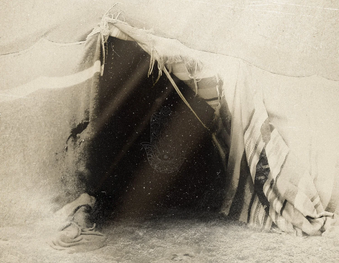
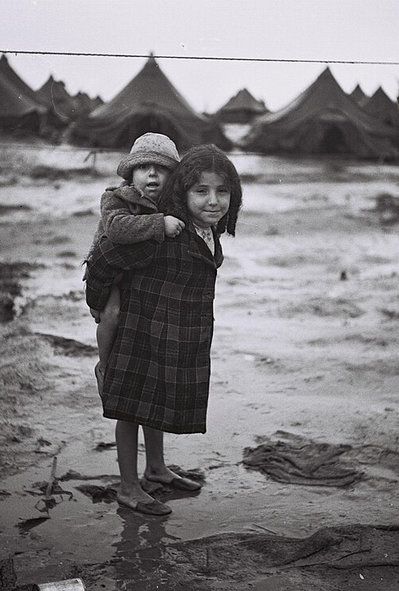
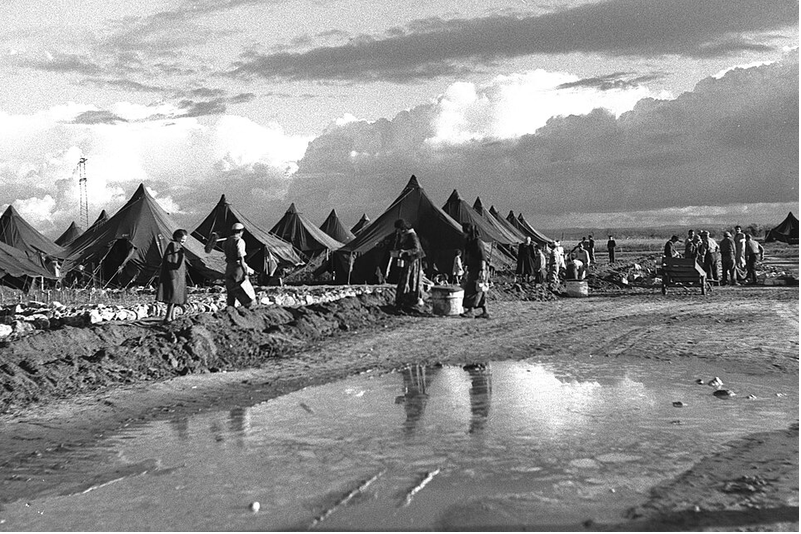
In the winter of 1949–50, sixteen-year-old Mazal arrives in Israel from Yemen with her infant twins, Benzi and Yona. She comes to a young country filled with the hope of building a safe new life. Instead, she finds an overcrowded, cold, and muddy immigrant camp, where families live in fragile tents and depend upon a system whose language they do not understand. When Yona disappears, Mazal receives no clear or satisfactory account of what has happened to her. She has no daughter to hold, no certainty that would allow her to grieve, and no explanation capable of closing the void that has opened in her life.
I wanted to explore not only what happened to Yona, but also what happens to a woman when her most fundamental right to hold her child, protect her, and know what became of her, is taken away by institutions far more powerful than she is. How does a person change when she learns that the system will not listen? What happens to trust, to the capacity for love, and to one’s sense of safety in the world? How does a mother live when she is trapped between grief without a grave and hope without proof?
The consequences extend beyond Mazal. Benzi, the twin who remains, grows up beside a sister he cannot remember, yet she is present in every room of the family’s life. He is the child who was not lost, but who must at times compete with the ghost of the child who was. Mazal loves him deeply, but the uncertainty surrounding Yona’s fate inevitably enters their relationship. The disappearance is not merely an
event from the past. it becomes a living force that shapes an entire family.
My impulse to write Echoes of Mazal did not come from documents alone. I knew people whose family stories gave this historical episode faces, names, and voices.
Someone very close to me had an older sister who disappeared as a baby from the Rosh HaAyin transit camp. Her parents refused to accept the answer they were
given. Despite their limited command of Hebrew and their unfamiliarity with the bureaucratic systems confronting them, they left behind their daily lives and began a long search across the country. For approximately six months, they went from one institution to another, asking questions and refusing to give up.
They eventually found their baby alive in a WIZO children’s home in Jerusalem. She was returned to them, but they were given no satisfactory explanation of how she had come to be there. For me, this story altered the boundaries of what seemed possible. One case cannot establish what happened to every child whose family reported a disappearance, and it would be wrong to impose a sweeping historical conclusion upon it. It does, however, establish something important about this particular family’s experience: the possibility that a child could be transferred elsewhere while her parents remained unaware of her whereabouts was not merely a product of the literary imagination.
Most families were not in a position to do what those parents did. Some lacked the money, language, knowledge, or emotional strength required to confront the authorities. Many were left with information delivered only verbally, without seeing
their child’s body, participating in a burial, or receiving clear documentation. Even in cases where records indicating a death were later located, the absence of a farewell, a satisfactory explanation, and a known grave left a wound that cannot be reduced to a bureaucratic failure.
Three official committees investigated what has become known as the Yemenite, Mizrahi, and Balkan Children Affair. They concluded that most of the children whose cases they examined had died, while the fate of dozens remained unresolved. The
subsequent release of archival documents, together with failures in record-keeping and discrepancies between family testimonies and official records, did not restore the trust of many of the affected families. To this day, there is profound disagreement in Israel about the scale of the affair, responsibility for what occurred, and the meaning of the available evidence.
To understand Mazal’s rupture, it is also necessary to understand the circumstances in which she arrived in Israel. Hundreds of thousands of immigrants entered a young and impoverished country within a very short period, without sufficient infrastructure to accommodate them. Many had endured arduous journeys and arrived ill and exhausted. The immigrant and transit camps struggled with overcrowding, harsh weather, shortages, and infectious disease. Infant mortality was high, and medical teams sometimes worked under almost impossible conditions.
These circumstances help explain some of the tragedies, but they do not erase the suffering of the families, the immense imbalance of power, or the grave failures of communication and documentation. Parents who did not speak Hebrew were
required to entrust their children to people who did not always understand their language or respect their culture. Even when professionals believed that they were acting in the children’s best interests, parents were frequently excluded from decisions concerning their own families.
The novel explores this painful cultural encounter as well as the disappearance itself. In one scene, religious Yemenite boys return from an educational institution with their pe’ot-their traditional sidelocks-cut off. The boys’ pe’ot had been grown with care and formed part of their religious and family identity. In the new country, they were told that these were no longer necessary. On the surface, it was a haircut. In reality, it was a moment in which a child learnt that, in order to belong, he might have to leave part of himself behind.
The establishment of Israel was an extraordinary historical endeavour, and my own parents participated in it actively, idealistically, and with a pioneering spirit. I am sometimes asked whether writing about injustices that occurred during this period undermines my love for the country or creates an inner conflict. My answer is no. Loving a place does not require us to deny its wounds. On the contrary, I believe that a willingness to look at the painful and troubling parts of its history is an expression of responsibility towards it.
As a novelist, however, I did not seek to decide what historians, researchers, and commissions of inquiry have been unable to resolve. I did not want to suggest that my novel had solved a mystery that reality itself has yet to solve. I wanted to ask a
different question: what did life feel like from within for a mother who did not know?
Whenever historical pain is transformed into a novel, an unavoidable moral question arises: what does a novelist have the right to invent? Fiction gave me the freedom to create Mazal, enter her thoughts, and imagine the places that official documents could never reach. I could write the moment when she awakens and discovers that her baby is gone, the way her body reacts before her mind can understand, the paralysing anger of being met with no answers, and the hope she sometimes resents because it will not allow her to grieve. But this imaginative freedom did not give me permission to use the suffering of real families merely as a source of entertainment. My responsibility was to distinguish among documented fact, personal testimony, and invention, not to present a fictional possibility as historical proof, and not to claim knowledge of what remains unknown.
I also had to ask myself whether I was turning Mazal into an instrument for conveying a message rather than allowing her to become a complete human being. It would have been easier to portray her as an unfailingly virtuous mother whose
sole purpose was to represent an injustice. Such a woman, however, would not have felt truthful. Mazal is capable of immense generosity, but she can also be demanding and severe. She longs for intimacy while simultaneously pushing people away. She is courageous, but at times her courage hardens into severity. She loves Benzi, yet does not always recognise the price he pays for the space his missing sister occupies in both their lives.
I wanted to grant Mazal the right to be complicated-a right too often denied to fictional characters who represent wounded or marginalised communities. Such characters are frequently expected to be morally flawless before the injustice committed against them is considered worthy of recognition. No human being should have to be perfect in order to deserve justice.
For this reason, Mazal could not remain imprisoned within the immigrant camp. She pursues an education, forms profound friendships, falls in love, endures further losses, raises her son, and builds an independent professional life. Her closest friend, Bracha, whose name means “blessing”, offers her, perhaps for the first time, a sense of home and acceptance. Bracha’s family opens a door to Mazal without requiring her to erase herself before she can enter.
These relationships matter as much as the injustice at the centre of the novel. They prevent the story from becoming one in which every representative of the establishment is cruel and Mazal’s entire life is reduced to an unbroken sequence
of victimhood. Alongside indifference, there is compassion. Alongside those who misuse their power are others who use theirs to open new possibilities. Reality, like literature, rarely exists solely in black and white. Yet an outwardly successful, even remarkable life does not necessarily bring healing. Yona’s disappearance remains with Mazal, affecting her ability to trust, form intimate bonds, and permit herself to be vulnerable. At one point, following another devastating loss, the defences she has constructed over many years collapse, forcing her to encounter the grief from which she has tried to escape through ceaseless action.
This became one of my central insights while writing her character: strength is not the opposite of vulnerability. Sometimes strength is the place where vulnerability hides. A woman can be a leader, an entrepreneur, and an object of admiration while
still carrying within her a frightened girl who is waiting for someone to tell her the truth. She can create a rich and meaningful life while continuing to hear, in every knock at the door, the possibility that the past has returned.
Echoes of Mazal is not an attempt to provide a simple answer to a complex historical affair, nor does it seek to turn pain into a tidy resolution. It explores how the violation of a fundamental right continues to act upon the human mind long after the original event and how its consequences pass from parents to children, enter relationships, and reverberate across generations. Mazal refuses to disappear alongside her daughter. She continues to build, love, work, and fight. The search for Yona is part of her life, but it is not the whole of her life. To me, this is the source of her greatest power.
Literature cannot return a missing child. It cannot take the place of a historical investigation, reopen a closed file, or provide a grave where no grave exists. Nor can it promise a family the answer that will finally bring peace. But it can insist that the human being behind the case file is not forgotten. It can restore a mother’s voice, at least on the page, and invite the reader to remain for a moment within her uncertainty, not as a historical statistic, but as a human experience. Behind every missing document and every line in an official register stood a family, a home, and a life divided forever into “before” and “after”.
I could not give every family an answer, and I could not give Mazal a past without pain. I could only give her a voice and ensure that, when history leaves an empty grave behind, silence is not the only thing that remains.
This book is dedicated to Haymanot Kasau, who has been missing since 25 February 2024, when she was nine years old. She was last seen at the immigrant absorption centre in Safed where she lived with her family, who had immigrated to Israel from Ethiopia approximately three years earlier.
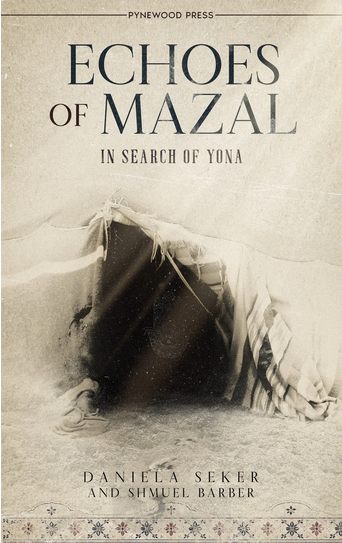
I cannot stress how honoured I am to host Daniela’s writing. Please consider checking out her book. A portion of proceeds from the book will be allocated to support efforts to find Haymanot Kassau, who disappeared at the age of nine from Safed.